
What's Happening?
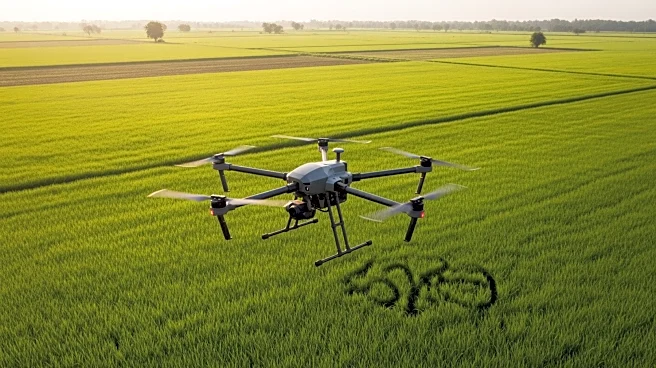
Drone technology is being explored as a transformative tool in agriculture, particularly in Bangladesh, where it can address challenges such as water management, pest control, and efficient use of fertilizers.
Drones equipped with high-resolution cameras and sensors can provide precise data on soil moisture and crop health, enabling farmers to optimize irrigation and detect early signs of disease or pest infestations. This technology promises to enhance agricultural productivity by reducing waste and improving crop quality. Despite its potential, the adoption of drone technology in Bangladesh faces hurdles such as high costs and limited local manufacturing, which restrict its use to pilot projects.
Why It's Important?
The integration of drone technology in agriculture could significantly impact food security and economic stability in Bangladesh. By improving efficiency and sustainability, drones can help increase crop yields and reduce dependency on food imports. This is crucial for a country with a growing population and limited arable land. Additionally, the technology offers new employment opportunities in rural areas, potentially reducing urban migration and fostering innovation. However, widespread adoption requires overcoming financial and infrastructural barriers, necessitating coordinated efforts from the government and private sector.
What's Next?
For drone technology to become a staple in Bangladeshi agriculture, there needs to be investment in local manufacturing and training programs for drone operators. Government policies and financial support could facilitate broader adoption, making the technology accessible to small and marginal farmers. If these steps are taken, drones could play a pivotal role in modernizing agriculture, ensuring food security, and improving the livelihoods of millions of farmers.
Beyond the Headlines
The use of drones in agriculture not only promises economic benefits but also aligns with environmental sustainability goals. By enabling precise application of fertilizers and pesticides, drones can minimize chemical runoff and soil contamination, contributing to ecological conservation. This shift towards technology-driven farming could redefine agriculture's image, attracting younger generations to the sector and promoting a more sustainable approach to food production.