







What's Happening?
The Homer City Council in Alaska has voted 5-1 to approve Ordinance 26-54, which permits residents to use humane live traps for capturing feral rabbits and other nuisance animals on their private property. This decision follows numerous complaints from
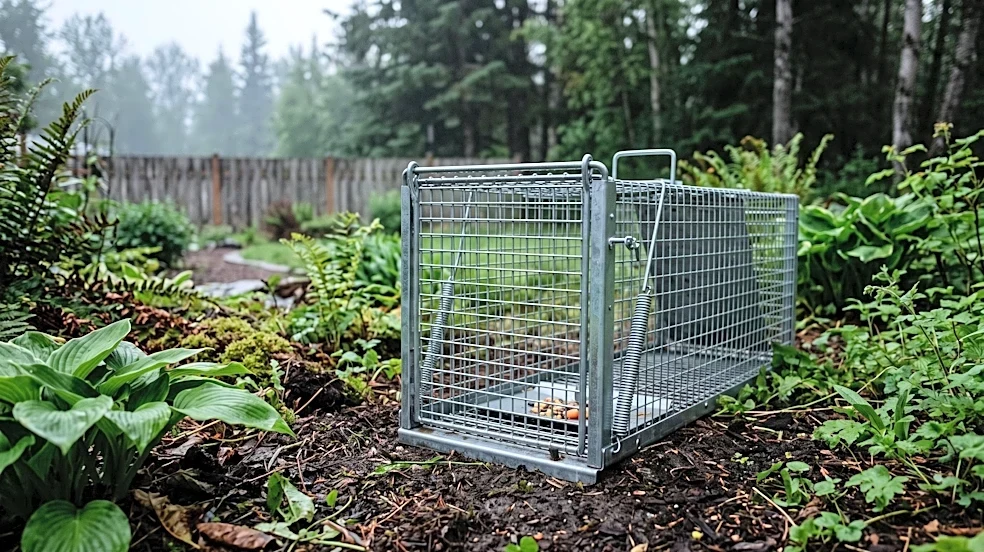
residents regarding property and garden damage caused by the growing feral rabbit population. The new ordinance eases trapping restrictions that have been in place since 2005, which previously prohibited even non-injurious traps. Council Members Jason Davis and Donna Aderhold sponsored the measure, aiming to provide property owners with a legal means to address the issue. The ordinance specifies that only cage or box traps designed to capture animals without injury are allowed, and these traps must be checked at least once every 12 hours. It explicitly excludes native snowshoe hares, squirrels, birds, and other protected wildlife, focusing solely on designated pests. Injurious traps, snares, and poison remain prohibited. Captured animals must be handled humanely, meaning without unnecessary pain, suffering, injury, or distress, and cannot be abandoned or released elsewhere. Options for residents include keeping the animal as a pet, finding an adopter, or surrendering it to a willing shelter, though the Homer Animal Shelter has indicated limited capacity for feral rabbits.
Why It's Important?
This ordinance is important for Homer residents as it provides a legal avenue for managing a persistent problem that has led to significant property damage. The previous restrictions, enacted in 2005 after an incident involving a pet cat, left homeowners with few options to protect their property from nuisance animals. The new measure reflects a shift in local policy to empower property owners while still maintaining regulations against inhumane practices and protecting native wildlife. The debate surrounding the ordinance, particularly Council Member Caroline Venuti's dissenting vote and concerns raised by Council Member Shelly Erickson about increased predator activity, highlights the complex balance between urban wildlife management, property rights, and animal welfare. While the Alaska Department of Fish and Game has not directly linked the feral rabbit population to an increase in predators, the presence of eagles, lynx, and bears in residential areas, as reported by Erickson, underscores potential ecological impacts and public safety concerns that could arise from unchecked feral animal populations. The ordinance also clarifies the distinction between domestic rabbits living in the wild and native hares, which is crucial under Alaska's wildlife regulations concerning nonnative species.
What's Next?
Following the approval of Ordinance 26-54, Homer residents can now legally begin using humane live traps to manage feral rabbits and other designated pests on their property. However, the practical implementation of the ordinance faces challenges, particularly regarding the humane disposal of captured animals. Homer Animal Shelter Director Jillian Rogers has stated that the shelter has limited space and resources and cannot serve as a general destination for feral rabbits, which are often not suitable for adoption. This means residents will need to find alternative solutions for the animals they trap, such as finding adopters or keeping them as pets, which may prove difficult for truly feral individuals. Council Member Donna Aderhold acknowledged these limitations, suggesting that the ordinance is not expected to eliminate the feral rabbit population entirely but rather to provide a legal option for property owners. The city will likely monitor the effectiveness of the new rules and any unforeseen consequences, such as an increase in surrendered animals or continued property damage, which could lead to further discussions or adjustments to animal control policies in the future. Education on responsible pet ownership, as advocated by Council Member Venuti, may also become a more prominent focus.
Beyond the Headlines
The Homer City Council's decision to allow live trapping of feral rabbits touches upon broader themes of urban ecology, human-wildlife coexistence, and the ethical considerations of animal control. The presence of feral rabbits, a nonnative species, highlights the impact of introduced species on local ecosystems and the challenges of managing their populations in residential areas. The ordinance attempts to balance the rights of property owners to protect their land with the imperative for humane treatment of animals. The difficulty in finding suitable homes for captured feral rabbits underscores a systemic issue in animal welfare: the strain on shelters and the lack of resources for managing large numbers of unadoptable animals. This situation could prompt a reevaluation of community-wide strategies for preventing feral animal populations, such as stricter regulations on pet abandonment or public awareness campaigns about the responsibilities of pet ownership. Furthermore, the discussion about predators entering residential areas in pursuit of rabbits points to the interconnectedness of urban development and natural habitats, suggesting that changes in one area can have ripple effects throughout the local environment and potentially impact public safety.