






What's Happening?
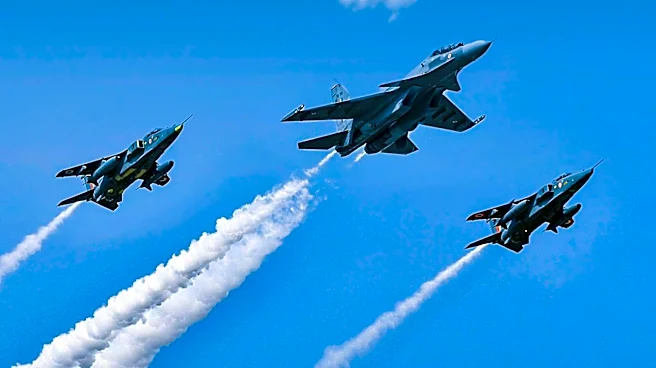
Colombia has joined the 'Shield of the Americas' security partnership, a U.S.-led initiative aimed at addressing common security threats such as illegal drug trafficking, organized crime, and irregular migration. This move marks a significant shift in Colombia's
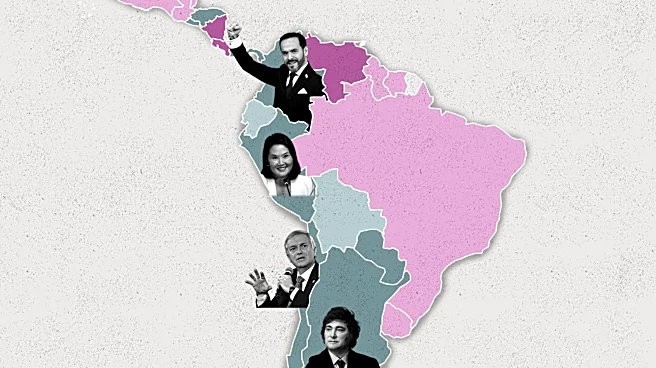
foreign policy under President Abelardo de la Espriella, who has prioritized military capacity and state authority over negotiation-centered approaches. The U.S. has announced a $1 billion security package to support Colombia, reflecting a renewed focus on strengthening military and political ties with the country. This development is part of a broader strategy by the U.S. to enhance its influence in Latin America through ideological affinity and security cooperation.
Why It's Important?
Colombia's participation in the 'Shield of the Americas' represents a strategic realignment in Latin America, with potential implications for regional security and U.S. influence. By aligning more closely with the U.S., Colombia is positioned to play a key role in addressing security challenges in the region, particularly those related to drug trafficking and organized crime. This partnership could lead to increased military cooperation and intelligence sharing, enhancing the capacity of both countries to combat these threats. The shift also signals a departure from the previous administration's approach, which sought greater autonomy and improved relations with neighboring countries like Venezuela and Cuba.
What's Next?
The new security partnership is likely to result in increased U.S. military presence and support in Colombia, as well as joint operations to combat organized crime. This could lead to heightened tensions with countries that oppose U.S. policies in the region, such as Venezuela. Additionally, Colombia's closer ties with the U.S. may influence its diplomatic relations with other countries, particularly in the Middle East, where it has promised to strengthen alliances with Israel. The broader implications of this shift will depend on how other Latin American countries respond and whether they choose to align with or oppose the U.S.-led initiative.