



What's Happening?
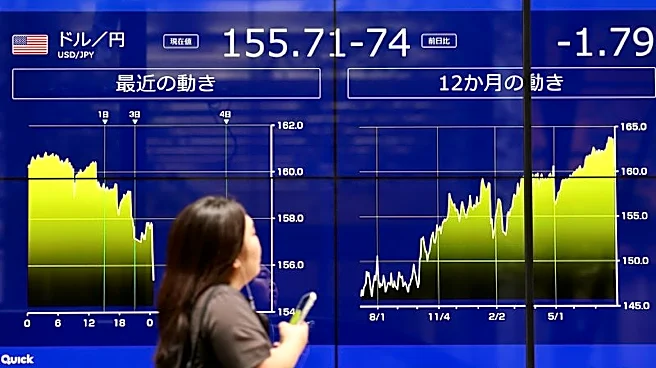
The Japanese yen surged to a three-month high against the dollar and euro following coordinated intervention by Japan and the U.S. in the foreign exchange markets. This intervention aimed to support the yen, which has been under pressure due to Japan's
monetary policy. The Bank of Japan and the U.S. Treasury's actions have sparked speculation about further interventions. The yen's rise has been attributed to Japan's significant spending on currency interventions, totaling over $100 billion this year. The intervention reflects a strategic move to stabilize the yen and address the wide yield differentials between Japan and other countries.
Why It's Important?
The intervention in the currency markets highlights the challenges faced by Japan in managing its monetary policy and the yen's value. A stronger yen can impact Japan's export-driven economy by making its goods more expensive abroad. The coordinated action with the U.S. underscores the importance of international cooperation in addressing currency volatility. This move could influence market perceptions about the effectiveness of foreign exchange interventions and potentially alter long-term market dynamics. The intervention also raises questions about the implications for U.S. Treasury yields, as selling treasuries to fund these actions could push yields higher.
Beyond the Headlines
The intervention by Japan and the U.S. may challenge the prevailing market view that foreign exchange interventions have limited long-term effects. Depending on the broader economic context, such actions can significantly influence market trends and trigger shifts in investor behavior. The strategic use of currency interventions could become a more prominent tool for countries facing similar economic challenges, potentially leading to more frequent international collaborations in the financial markets.