
What's Happening?
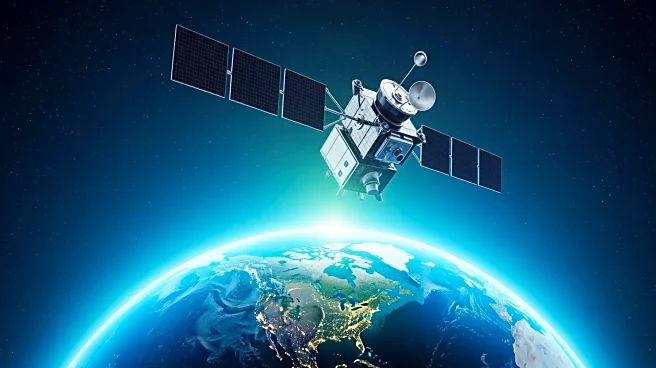
NASA's Clouds and the Earth's Radiant Energy System (CERES) program, managed by the Langley Research Center, has been a cornerstone in climate monitoring since its inception in the late 1980s. The program has deployed
seven instruments across five missions since 1997, with six currently operational. Recent updates from the CERES Science Team Meetings (STMs) highlight the program's ongoing efforts to monitor Earth's energy budget and climate dynamics. The meetings, held periodically, provide updates on the status of CERES instruments, data products, and scientific findings. Key discussions have focused on the global mean surface temperature increases, the performance of CERES instruments, and the development of new algorithms to improve data accuracy. The program also collaborates with international partners like the European Space Agency to enhance data comparison and validation efforts.
Why It's Important?
The CERES program plays a critical role in understanding Earth's climate system by providing essential data on the planet's energy balance. This information is vital for climate scientists and policymakers as it helps in predicting climate change impacts and formulating mitigation strategies. The program's data supports various climate models and contributes to international climate research efforts. By improving the accuracy of climate data, CERES aids in better understanding phenomena like global warming, sea level rise, and extreme weather patterns. The program's collaboration with international agencies further enhances the global climate monitoring network, ensuring comprehensive and reliable data for decision-making.
What's Next?
Looking ahead, the CERES program plans to continue its series of Science Team Meetings to further refine its data products and algorithms. The team is also preparing for future satellite missions that will carry CERES instruments, ensuring the continuity of climate data collection. Additionally, the program aims to enhance its collaboration with international partners to improve data validation and comparison. These efforts will help in maintaining a robust climate monitoring system that can adapt to new scientific challenges and technological advancements.
Beyond the Headlines
The CERES program's work extends beyond immediate climate monitoring, influencing long-term climate policy and research. By providing accurate data on Earth's energy budget, CERES helps in understanding the complex interactions between different climate variables. This knowledge is crucial for developing effective climate adaptation and mitigation strategies. The program also contributes to public awareness and education on climate issues, highlighting the importance of scientific research in addressing global challenges.