






What's Happening?
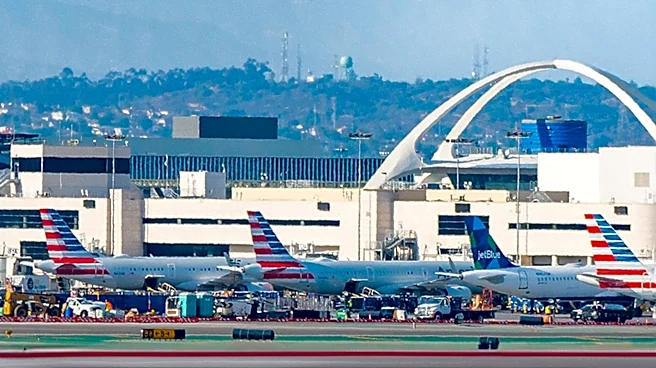
On November 2, 2026, Miami International Airport (MIA) faced substantial departure delays, with some reaching up to two hours, as a result of thunderstorm-related traffic management restrictions imposed by the Federal Aviation Administration (FAA). These
ground stops were also implemented at Fort Lauderdale-Hollywood International Airport and another airport serving the Palm Beach area. The FAA confirmed that these restrictions were necessary to limit the number of aircraft entering airspace or airports where operational capacity was reduced due to adverse weather conditions. An FAA operational snapshot at 4:17 p.m. UTC indicated gate-hold and taxi delays ranging from one hour and 46 minutes to two hours at MIA, with delays increasing at the time of the report. While arriving aircraft experienced shorter airborne delays of 15 minutes or less, the overall disruption impacted passengers, including those with domestic and international connections.
Why It's Important?
The widespread flight disruptions at Miami International Airport, a critical hub for both international and domestic travel, underscore the vulnerability of air travel to weather phenomena. As America’s busiest airport for international freight and the second-busiest for international passengers, delays at MIA have significant ripple effects across the national and international aviation network. Such incidents can lead to substantial economic losses for airlines due to missed connections, re-routing costs, and passenger compensation. For Miami-Dade County and Florida, where MIA is a leading economic engine generating $212 billion in business revenue and attracting approximately 60% of all international visitors, prolonged or frequent disruptions could impact tourism and trade. Passengers, particularly those with tight connections or time-sensitive travel, face considerable inconvenience and potential financial burdens.
What's Next?
The FAA indicated that further ground stops or ground delay programs might be possible throughout the day, depending on changing weather conditions. This suggests that the situation could remain fluid, requiring continuous monitoring and adjustments by air traffic control. Passengers whose flights were affected may experience knock-on disruption even after the initial restrictions are lifted, particularly if their aircraft arrived late for subsequent departures. Airlines will likely work to re-accommodate affected passengers, which could lead to further delays and cancellations in the coming hours or days as they attempt to normalize their schedules. Travelers planning to fly through MIA or other South Florida airports in the near future should monitor flight statuses and weather forecasts closely.
Beyond the Headlines
This event highlights the broader challenge of managing air traffic in increasingly unpredictable weather patterns, a concern that could intensify with climate change. The reliance on ground stops, while necessary for safety, points to the need for advanced air traffic management systems that can better adapt to dynamic environmental conditions. Furthermore, the incident brings into focus the economic and logistical fragility of major transportation hubs. As airports like MIA continue to expand and handle growing passenger and cargo volumes, the impact of even short-term disruptions becomes more pronounced, necessitating robust contingency planning and infrastructure resilience. The incident also serves as a reminder for travelers to consider travel insurance and flexible booking options, especially when traveling during seasons prone to severe weather.