
What's Happening?
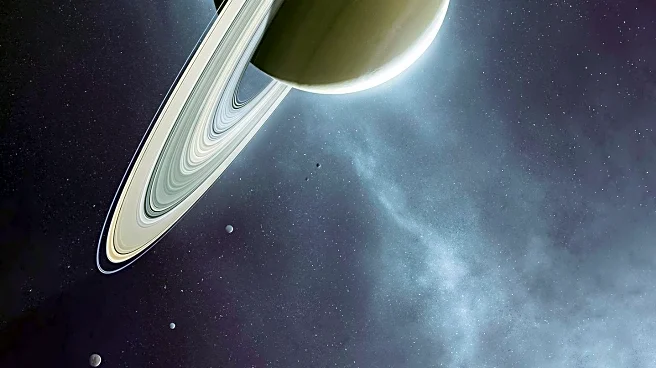
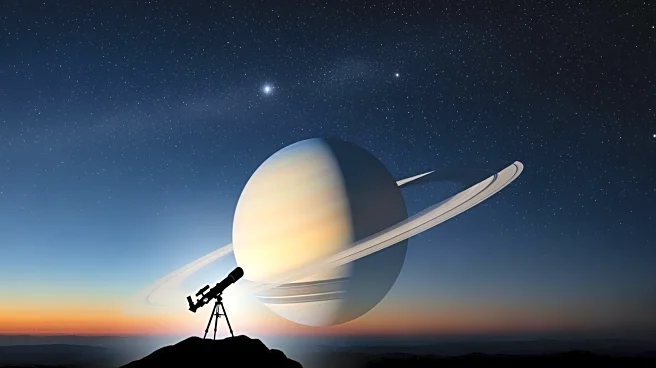
Astronomy enthusiasts are being encouraged to take advantage of the last opportunities to view Saturn in the evening sky as it gradually sinks lower in the western horizon after sunset. In early March, Saturn can be seen just a few degrees above the horizon,
making it a prime time for telescopic observation of its iconic ring system. The planet's disk, along with its southern hemisphere, is visible, and observers might also spot Titan, Saturn's brightest moon, although this may be challenging due to atmospheric conditions near the horizon. As the days progress, Saturn will set earlier each evening, eventually leading to a conjunction with Venus in about a week. This celestial event coincides with the transition to daylight saving time, offering a unique viewing opportunity for sky watchers.
Why It's Important?
The opportunity to observe Saturn is significant for both amateur and professional astronomers, as the planet's rings and moons provide valuable insights into planetary science and the dynamics of our solar system. The conjunction with Venus presents a rare chance to witness two bright planets in close proximity, enhancing public interest in astronomy and potentially inspiring educational activities. Such events can stimulate interest in space exploration and science, encouraging a broader appreciation for the universe and our place within it. Additionally, these celestial occurrences can foster community engagement through public viewing events and discussions, promoting scientific literacy and curiosity.
What's Next?
As Saturn continues to set earlier, astronomers and enthusiasts will prepare for the upcoming conjunction with Venus, which promises to be a visually striking event. This conjunction may lead to increased public interest and participation in astronomy-related activities, such as stargazing events and educational programs. Observatories and astronomy clubs might organize special viewing sessions to capitalize on the public's interest. Furthermore, the transition to daylight saving time could affect the timing of observations, requiring adjustments in planning for those wishing to capture the event. The conjunction also serves as a reminder of the dynamic nature of our solar system, encouraging ongoing observation and study.