
What's Happening?
The Food and Agriculture Organization (FAO) of the United Nations has reported a decline in global food commodity prices for December. The FAO Food Price Index, which monitors monthly changes in international
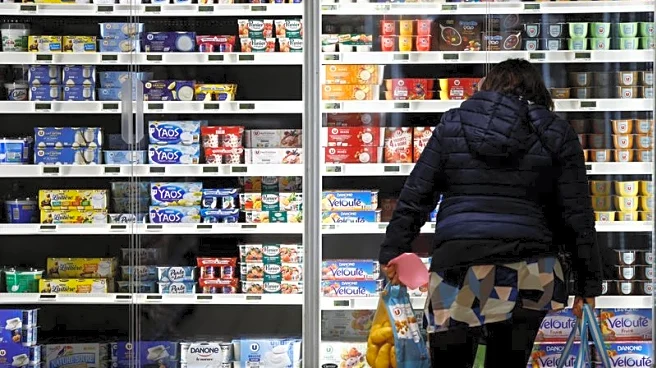
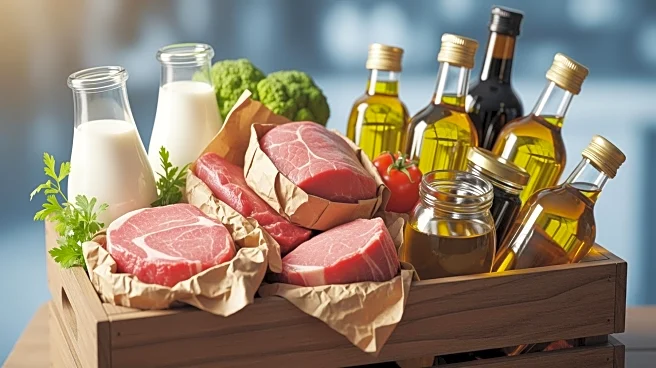
food prices, averaged 124.3 points in December, marking a 0.6 percent decrease from November and a 2.3 percent decrease from the previous year. This decline was primarily driven by reductions in the prices of dairy products, meat, and vegetable oils, which outweighed increases in cereal and sugar prices. The FAO Cereal Price Index rose by 1.7 percent due to concerns over Black Sea wheat exports and strong maize import demand. Meanwhile, the FAO Vegetable Oil Price Index fell by 0.2 percent, reaching a six-month low. The FAO Meat Price Index decreased by 1.3 percent, with notable declines in bovine and poultry prices. The FAO Dairy Price Index saw a 4.4 percent drop, largely due to increased cream availability in Europe. Conversely, the FAO Sugar Price Index increased by 2.4 percent, influenced by reduced sugar production in Brazil.
Why It's Important?
The decline in global food prices has significant implications for international trade and domestic economies. Lower food prices can alleviate inflationary pressures in countries heavily reliant on food imports, potentially stabilizing consumer prices and improving food security. However, the decrease in prices may also impact farmers' incomes, particularly in regions where production costs remain high. The fluctuations in cereal and sugar prices highlight the ongoing volatility in global agricultural markets, influenced by geopolitical tensions and environmental factors. The report underscores the importance of monitoring global food supply chains and addressing challenges such as animal disease outbreaks and export restrictions, which can disrupt market stability.
What's Next?
Looking ahead, stakeholders in the agricultural sector may need to adapt to the changing market conditions by enhancing supply chain resilience and exploring new trade partnerships. Policymakers might focus on supporting farmers through subsidies or incentives to mitigate the impact of price declines. Additionally, international organizations could play a role in facilitating dialogue and cooperation to address the root causes of market volatility, such as climate change and geopolitical conflicts. The ongoing monitoring of food prices and production trends will be crucial in anticipating future shifts and ensuring global food security.