



What's Happening?
Rob Sand, the Democratic nominee for governor, and his running mate Dave Muhlbauer, the nominee for lieutenant governor, hosted a roundtable discussion with agriculture leaders in Iowa. The event focused on their 'Opportunities for All' plan, which aims
to strengthen Iowa's agriculture economy, support family farms, and ensure the success of future generations of farmers. Former Iowa Governor and U.S. Secretary of Agriculture Tom Vilsack praised Sand's "innovative" approach, which emphasizes making farms, rather than farmers, work harder. Polk County century farmer LaVon Griffieon also commended the plan as a "breath of fresh air." Sand highlighted that farmers are willing to participate in conservation programs but are often put on waitlists due to insufficient political support for funding these initiatives.
Why It's Important?
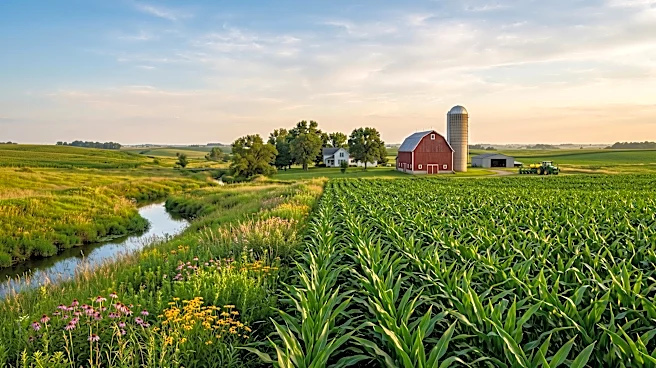
This gathering and the 'Opportunities for All' plan are significant for Iowa's agricultural sector and the broader U.S. food system. Iowa is a leading agricultural state, and policies impacting its farmers have ripple effects on national food production, environmental sustainability, and rural economies. The plan's focus on diversifying family farms through technologies like manure digesters, which convert manure into renewable natural gas and transportable fertilizer, addresses critical issues such as environmental conservation, waste management, and the creation of new revenue streams for farmers. Endorsements from figures like Tom Vilsack, a former U.S. Secretary of Agriculture, lend considerable weight to the plan's credibility and potential impact. The discussion also highlights a key tension in agricultural policy: farmers' willingness to adopt sustainable practices versus the political will to adequately fund and support such initiatives. This initiative could serve as a model for other agricultural states seeking to balance economic viability with environmental stewardship.
What's Next?
The 'Opportunities for All' plan, as presented by Rob Sand and Dave Muhlbauer, will likely become a central component of their gubernatorial campaign platform. The positive reception from agriculture leaders and the endorsement from Tom Vilsack suggest that the plan has resonated with key stakeholders in Iowa's farming community. Moving forward, the campaign will likely elaborate on the specific mechanisms for implementing the plan, including funding sources for conservation programs and incentives for adopting new technologies like manure digesters. The success of this plan will depend on its ability to gain broader political support and secure the necessary resources. If elected, Sand and Muhlbauer would face the challenge of translating these proposals into actionable policies, which could involve legislative efforts to increase funding for agricultural conservation and innovation. The ongoing dialogue with farmers and agricultural experts will be crucial for refining the plan and ensuring its practical applicability.
Beyond the Headlines
The 'Opportunities for All' plan, with its emphasis on making farms work harder through diversification and technology, touches upon a deeper philosophical shift in agricultural policy. Traditionally, much of the focus has been on maximizing output from farmers, often leading to unsustainable practices and economic pressures. Sand's approach, by contrast, suggests a move towards optimizing the farm as an integrated system, leveraging natural processes and technological advancements to create multiple value streams. This includes not only food production but also energy generation and nutrient recycling, which can enhance resilience and reduce environmental impact. The plan also implicitly addresses the generational challenge in farming, aiming to create more attractive and sustainable livelihoods for new farmers. This holistic perspective could foster a more robust and environmentally conscious agricultural sector, potentially influencing national conversations about food security, renewable energy, and rural economic development.