


What's Happening?
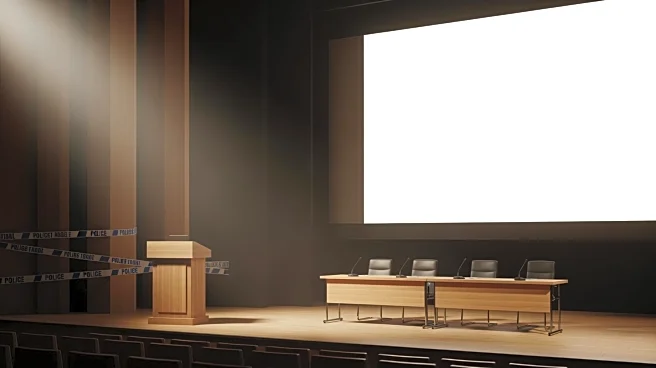
New York University (NYU) has announced that student speakers at its graduation ceremonies will deliver their remarks via prerecorded video rather than live. This decision aims to ensure a 'respectful experience' for attendees, as stated by a university
dean. The move follows incidents where live speeches deviated from approved content, leading to controversy. For instance, a previous speaker at NYU's Gallatin School condemned Israeli actions in Gaza, which was not part of the pre-approved speech, resulting in the university withholding the speaker's diploma. Similar actions have been taken at other institutions, such as the Massachusetts Institute of Technology and George Washington University, where speakers faced repercussions for delivering unapproved remarks. Critics argue that this approach stifles free expression and debate, which are fundamental to the academic environment.
Why It's Important?
The decision by NYU to use prerecorded speeches highlights a growing tension between maintaining decorum at public events and upholding free speech principles. Universities are traditionally seen as bastions of free thought and debate, and this move could be perceived as a shift towards more controlled and sanitized expressions of student voices. The implications extend beyond NYU, as other institutions may adopt similar measures, potentially leading to a broader cultural shift in how academic freedom is perceived and practiced. This could impact how future generations engage with controversial topics and express dissenting opinions, potentially stifling the robust exchange of ideas that is crucial for societal progress.
What's Next?
As universities continue to navigate the balance between free expression and maintaining order, it is likely that more institutions will face similar decisions. Stakeholders, including students, faculty, and civil rights organizations, may push back against such measures, advocating for policies that protect free speech while addressing concerns about respect and inclusivity. The debate may also prompt universities to reevaluate their policies on speech approval and the consequences for deviation, potentially leading to new guidelines that better align with the values of academic freedom.
Beyond the Headlines
The decision to use prerecorded speeches raises questions about the role of universities in fostering open dialogue and the potential consequences of limiting live expression. It touches on broader societal issues, such as the increasing polarization of public discourse and the challenges of managing diverse viewpoints in a respectful manner. This development may also influence how future leaders are trained to handle dissent and engage in constructive debate, shaping the cultural and political landscape in the long term.