





What's Happening?
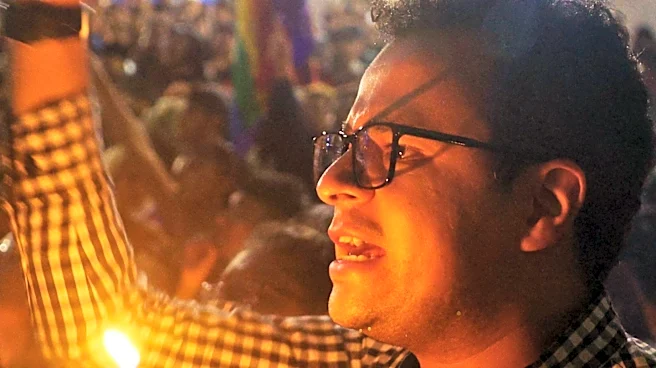
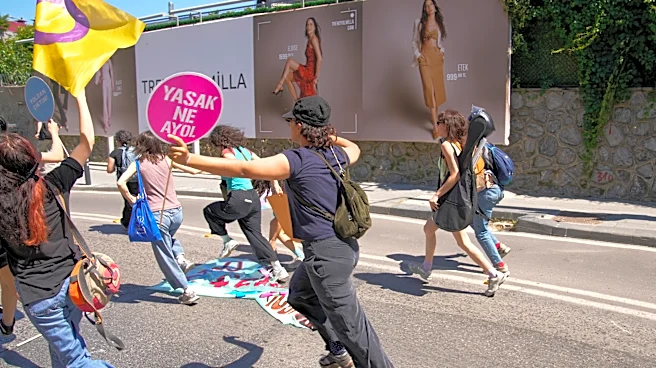
Turkish police detained dozens of demonstrators outside Istanbul's Caglayan courthouse who were protesting a nationwide crackdown on LGBTQ+ activists. The protesters were demanding the release of individuals taken into custody during recent raids. This
action follows a series of police operations in several cities, including Istanbul and Ankara, which the government states are part of President Recep Tayyip Erdogan's 'Decade of the Family' initiative. Justice Minister Akin Gurlek indicated the operation, named 'My Family is Safe,' targeted 162 suspects, nine associations, and 13 businesses, aiming to 'protect children, the institution of the family, and public order.' The Council of Europe’s Commissioner for Human Rights, Michael O’Flaherty, expressed concern over the detentions, stating that 'mere references to 'family values' or 'protection of children' cannot serve as legal justification for human rights restrictions.' Protesters carried banners and chanted slogans before police intervened, with one demonstrator noting a societal attempt to portray LGBTQ+ individuals as the cause of problems.
Why It's Important?
This crackdown signifies a deepening governmental stance against the LGBTQ+ community in Turkey, reflecting a broader effort to consolidate conservative elements within President Erdogan's political base. The increasing pressure on LGBTQ+ groups, including the banning of Istanbul Pride since 2015 and the violent dispersal of subsequent gatherings, indicates a systematic erosion of human rights and freedoms for this demographic. The government's justification, centered on 'traditional family values' and 'protection of children,' is a common tactic used to legitimize discriminatory policies. This approach not only impacts the lives of LGBTQ+ individuals but also raises concerns among international human rights organizations, such as the Council of Europe, about the state of civil liberties in Turkey. The detention of protesters and journalists highlights a shrinking space for dissent and freedom of expression, potentially isolating Turkey further from international norms regarding human rights.
What's Next?
The Turkish government is expected to continue its 'Decade of the Family' initiative, potentially leading to further raids, detentions, and restrictions on LGBTQ+ organizations and individuals. Justice Minister Akin Gurlek has already vowed to proceed with the campaign, dismissing concerns from the European Union. International bodies, including the Council of Europe, will likely continue to monitor the situation and issue statements of concern, though their direct influence on Turkish domestic policy remains limited. Protests by human rights groups and civil society organizations are anticipated to persist, despite the risk of police intervention and detention. The ongoing legal proceedings against those detained will be closely watched, as they could set precedents for future cases involving LGBTQ+ rights and freedom of assembly in Turkey. The situation may also prompt further diplomatic discussions and potential sanctions from international partners concerned about human rights violations.
Beyond the Headlines
The events in Turkey reflect a broader global trend where conservative governments increasingly target LGBTQ+ rights under the guise of protecting 'traditional values' or national identity. This strategy often serves to rally a specific political base and divert attention from other domestic issues. The use of terms like 'deviant movement' and 'perverts' by President Erdogan dehumanizes the LGBTQ+ community, making it easier to justify repressive measures and foster societal prejudice. This crackdown also has economic implications, as it could deter tourism and foreign investment from countries and companies that prioritize human rights and inclusivity. Furthermore, the suppression of protests and the detention of journalists underscore a concerning decline in democratic freedoms and the rule of law, impacting not just the LGBTQ+ community but all citizens who wish to exercise their rights to free speech and assembly. The long-term societal impact could be a more polarized and less tolerant environment, with significant consequences for social cohesion and individual well-being.