




What's Happening?
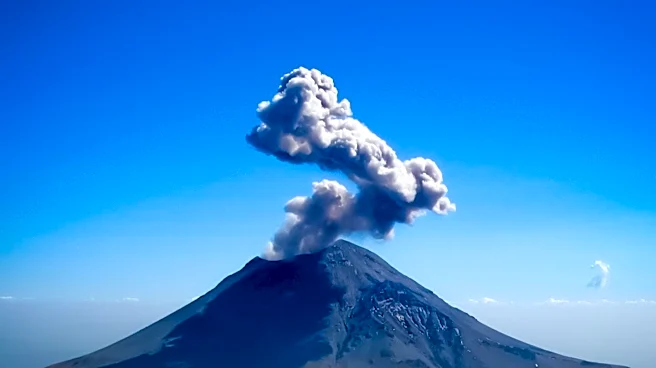
The Fuego volcano in Guatemala has erupted, leading to the evacuation of approximately 400 residents from nearby communities. Authorities have declared an 'orange alert,' the second-highest emergency level, due to increased volcanic activity. Temporary
shelters have been set up in Alotenango and Escuintla city to accommodate evacuees. Schools in the vicinity have been closed as a precaution against ash fall and further eruptions. The Fuego volcano, located near the tourist city of Antigua, is known for its frequent activity and poses a significant risk to local populations.
Why It's Important?
The eruption of the Fuego volcano is a critical event for Guatemala, impacting local communities and the tourism industry. The evacuation efforts highlight the importance of emergency preparedness and response in regions prone to natural disasters. The situation underscores the need for continuous monitoring and collaboration between authorities and residents to ensure safety. The eruption also serves as a reminder of the potential hazards posed by active volcanoes, which can disrupt lives and economies.
What's Next?
Authorities will continue to monitor the volcano's activity and provide updates to ensure the safety of residents and tourists. The focus will be on managing the immediate aftermath, including providing support to evacuees and assessing the impact on infrastructure and the environment. Long-term strategies may involve enhancing early warning systems and improving community resilience to future volcanic events.