







What's Happening?
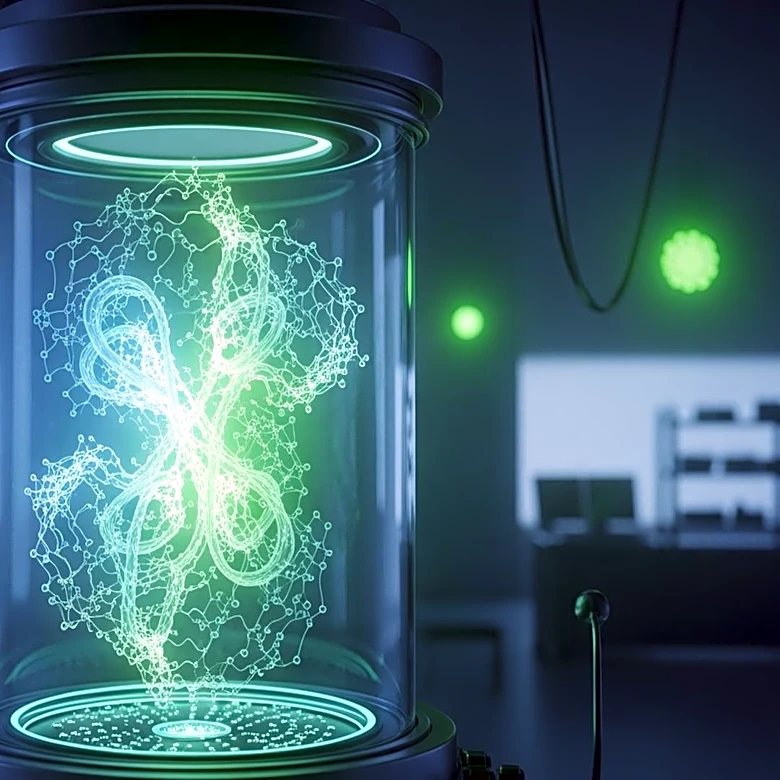
Researchers at the University of Konstanz have challenged a long-standing principle in physics known as Amontons' first law, which posits that friction is directly proportional to the applied load. The study, published in Nature Materials, involved a two-dimensional
array of freely rotating magnetic elements positioned above a second magnetic layer. Despite no physical contact between the layers, measurable friction was observed, driven by magnetic interactions. The experiment revealed that friction was weakest at both close and far distances between the layers, but increased at intermediate distances due to competing magnetic interactions. This discovery suggests that friction can arise from internal magnetic dynamics rather than surface contact, challenging traditional understanding.
Why It's Important?
This breakthrough has significant implications for the fields of physics and engineering, as it challenges a fundamental principle that has been relied upon for centuries. Understanding friction at the magnetic level could lead to advancements in micro- and nanoelectromechanical devices, such as magnetic bearings and atomically thin magnets. The findings open new possibilities for designing systems that utilize magnetic interactions to control friction without wear or surface roughness, potentially revolutionizing industries that depend on precise friction management.