



What's Happening?
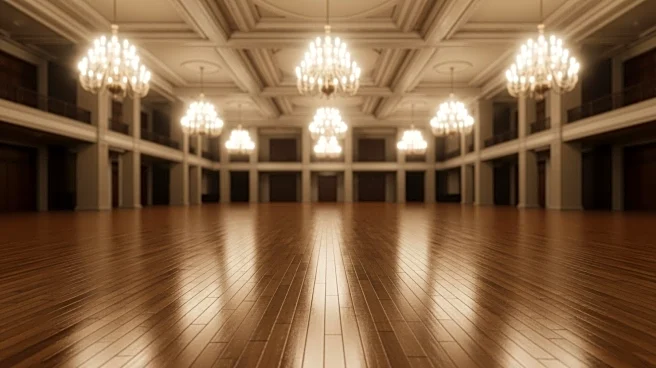
The White House is set to present details of President Trump's planned ballroom at the National Capital Planning Commission's monthly meeting. This comes months after the East Wing was demolished to make way for the construction. The ballroom project,
estimated to cost $400 million, has faced legal challenges from the National Trust for Historic Preservation, which claims the administration violated federal laws by proceeding without necessary reviews and approvals. The project aims to establish a permanent event space within the White House grounds, enhancing capacity for official functions and reducing reliance on temporary facilities. The commission, led by White House aide Will Scharf, will conduct a formal review in the spring, including public testimony and votes.
Why It's Important?
The construction of a new ballroom at the White House has significant implications for federal oversight and historic preservation. The legal challenges highlight concerns about adherence to federal laws and the preservation of historic sites. The project's cost, initially estimated at $200 million and now doubled, raises questions about fiscal responsibility and transparency, especially as it is funded by private donations. The development also reflects broader themes of executive power and the prioritization of presidential projects over established procedures. The outcome of the review process could set precedents for future federal construction projects and the balance between modernization and preservation.
What's Next?
The National Capital Planning Commission will conduct a more formal review of the ballroom project in the spring, which will include public testimony and votes. The outcome of this review could influence the project's timeline and scope. Additionally, the legal challenge by the National Trust for Historic Preservation may proceed, potentially affecting the project's progress. Stakeholders, including preservationists and government officials, will likely continue to debate the project's merits and compliance with federal regulations. The White House's response to these challenges and its engagement with the review process will be closely watched.