

What's Happening?
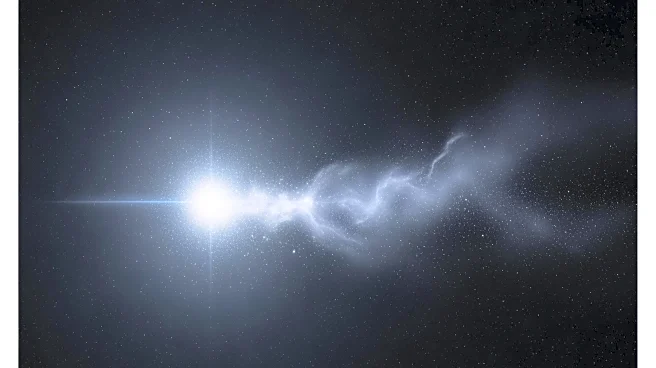
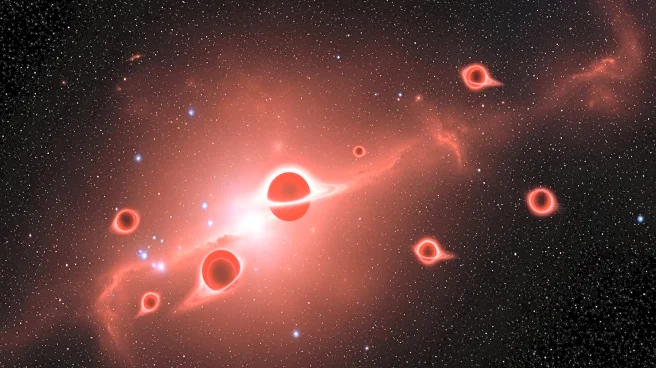
Researchers from the University of Copenhagen have solved the mystery of the 'little red dots' observed by the James Webb Space Telescope (JWST). These dots, visible in the early universe, have been identified as young black holes enshrouded in ionized
gas. The study, published in Nature, reveals that these black holes are significantly less massive than previously thought, emitting intense radiation as they accrete matter. This discovery provides insights into the rapid early growth of supermassive black holes and challenges previous assumptions about their formation.
Why It's Important?
The identification of these 'little red dots' as young black holes offers a new perspective on the early universe's dynamics and the formation of supermassive black holes. Understanding these processes is crucial for piecing together the history of the universe and the role of black holes in galaxy formation. The findings also highlight the capabilities of the JWST in uncovering previously hidden aspects of the cosmos, paving the way for future discoveries in astrophysics.
What's Next?
Further research will focus on studying these young black holes to understand their growth mechanisms and their impact on their surroundings. The findings may lead to revisions in models of black hole formation and evolution, providing a more comprehensive picture of the universe's early stages. Continued observations with the JWST and other telescopes will aim to identify more of these 'little red dots' and explore their significance in the broader context of cosmic evolution.