
What's Happening?
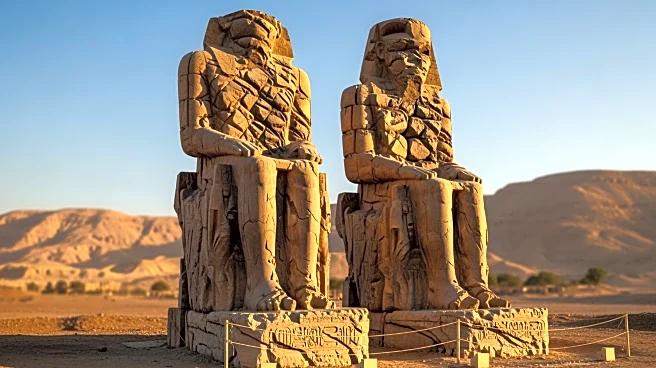
The Egyptian Ministry of Tourism and Antiquities has unveiled the newly restored Colossi of Memnon, monumental statues located at the entrance of the Luxor tomb of Pharaoh Amenhotep III. These statues,
which stand about 45 feet tall, have undergone extensive restoration efforts led by a coalition of international experts, including the German Archaeological Institute in Cairo and the World Monuments Fund. The restoration process involved cleaning, 3D-scanning, and updating the statues with both original and new materials to ensure historical accuracy and durability. The Colossi, originally damaged by earthquakes and floods, are now part of a broader effort to preserve Egypt's rich archaeological heritage. The site also revealed nearly 300 additional sculptures and fragments, contributing to the ongoing archaeological work in Luxor.
Why It's Important?
The restoration of the Colossi of Memnon is significant for both cultural heritage and tourism in Egypt. As iconic symbols of ancient Egyptian civilization, their restoration enhances the historical and cultural value of Luxor, a major tourist destination. This project not only preserves important artifacts but also boosts Egypt's tourism industry, which is a vital part of the country's economy. The involvement of international experts underscores the global interest in preserving world heritage sites. Additionally, the project highlights the challenges of archaeological conservation, such as dealing with fluctuating groundwater levels, and sets a precedent for future restoration efforts in the region.
What's Next?
Following the successful restoration of the Colossi of Memnon, efforts will continue at other significant sites in Luxor. Crews are set to restore a statue at the tomb of Ramses II and assess the preservation needs of Queen Nefertari's tomb before it can be opened to the public. These ongoing projects are expected to further enhance Luxor's appeal as a historical and cultural hub, attracting more tourists and scholars. The continued collaboration between Egyptian authorities and international experts will be crucial in ensuring the preservation of these ancient sites for future generations.