

What's Happening?
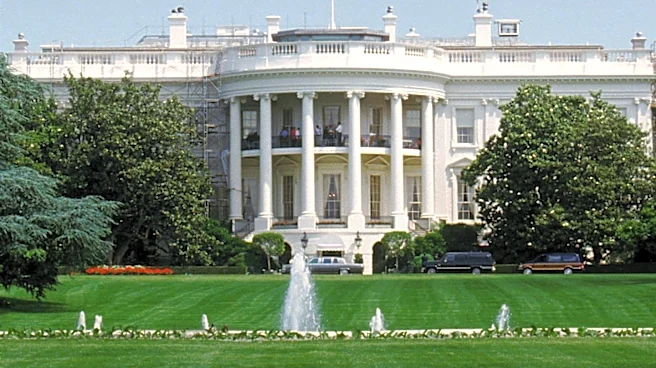
A forthcoming book by Azadeh Moaveni, titled 'The East Wing: Power, Intrigue, and the Untold Story of America’s First Ladies,' chronicles the evolution of the White House East Wing and the increasing influence of First Ladies and their staff. The book opens
with the demolition of the original East Wing in 2025 to make way for President Trump's vision of a new, modernized structure. Moaveni argues that this demolition overlooked the significant 'soft power' wielded by First Ladies from within the building. The book traces the development of the Office of the First Lady from Eleanor Roosevelt, who significantly expanded the role, through the second tenure of Melania Trump, highlighting how the growth of this office is intertwined with the broader story of women's equality. It details the roles of various staffers, from social secretaries to chiefs of staff, and their contributions to advancing the First Lady's agenda and opportunities for women.
Why It's Important?
Moaveni's book sheds light on a historically underappreciated aspect of American political power: the influence of First Ladies and their East Wing staff. By detailing how First Ladies like Eleanor Roosevelt, Pat Nixon, Betty Ford, Rosalynn Carter, Hillary Clinton, Laura Bush, and Michelle Obama shaped policy, diplomacy, and social initiatives, the book redefines our understanding of presidential administrations. It emphasizes that the role of the First Lady, though undefined and unpaid, has been a crucial platform for advancing women's rights and addressing national and international issues. The narrative underscores how the professionalization of the Office of the First Lady has mirrored the broader societal changes in women's roles in politics and public life, making it a significant contribution to both political history and women's studies.
What's Next?
The book's release is expected to spark renewed interest in the historical and contemporary roles of First Ladies and the structure of the East Wing. It prompts reflection on how the Office of the First Lady will function within the newly constructed East Wing and whether its core identity and influence will be maintained. The ongoing evolution of this role, as each First Lady individually crafts her approach, suggests that the impact of the East Wing will continue to be a dynamic and significant element of the presidency. The book's insights may also encourage further academic research and public discourse on the 'soft power' exerted by presidential spouses and their teams, potentially influencing how future administrations perceive and utilize this unique office.
Beyond the Headlines
The demolition and reconstruction of the East Wing, as described in Moaveni's book, symbolize a broader tension between historical preservation and modernization within the White House complex. The author's concern that the influence of First Ladies was overlooked during this process highlights a deeper cultural tendency to undervalue contributions made outside traditional power structures. The concept of 'soft power' as exercised by First Ladies, often through social initiatives, cultural diplomacy, and advocacy, offers a nuanced perspective on leadership. This form of influence, distinct from legislative or executive authority, can profoundly shape public opinion and policy outcomes, demonstrating that power in Washington extends beyond the West Wing and formal political roles. The book implicitly challenges readers to consider the diverse ways in which leadership and change are enacted within the American political landscape.