







What's Happening?
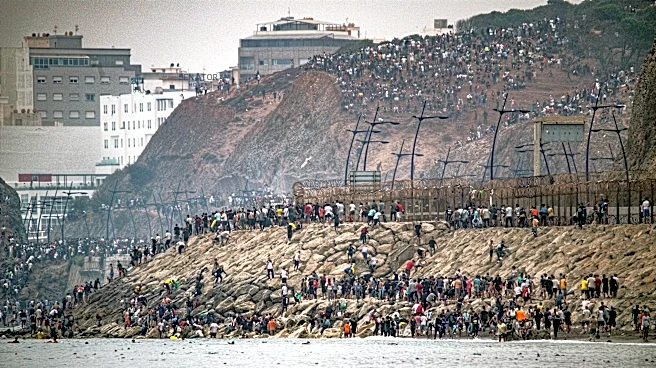
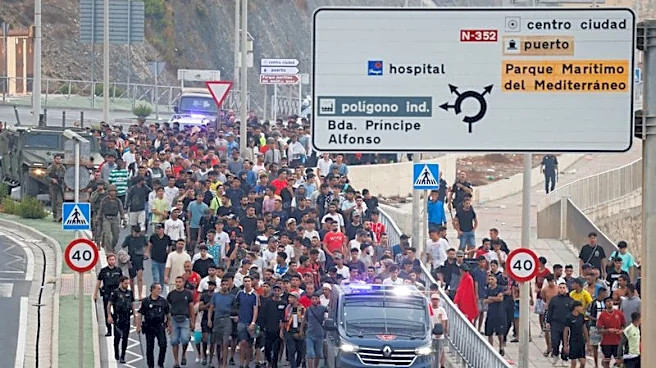
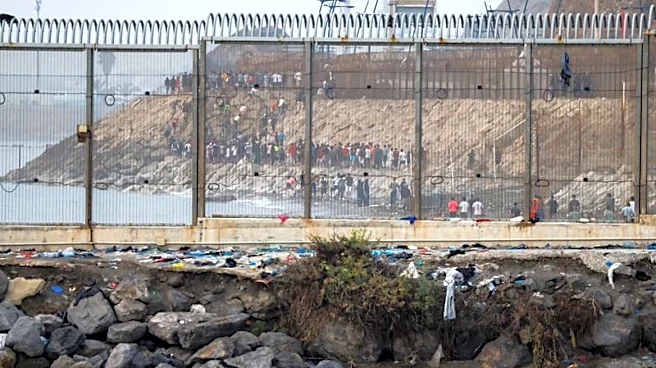
The Ceuta migrant crisis in late July 2026 saw a massive influx of people from Morocco into Spain's North African territory, Ceuta. Spanish authorities reported tens of thousands of crossings, with many individuals returning to Morocco. The crisis prompted
Italy to impose temporary checks on non-EU travelers from Spain, citing security concerns. The legal complexities of the situation involve Spain's obligations under EU and international law, including asylum and non-refoulement principles. A Spanish Supreme Court ruling emphasized that Spain's border actions must comply with legal standards, particularly regarding the rejection of migrants at the border. The crisis has highlighted the challenges of managing large-scale migration within the framework of European law.
Why It's Important?
The Ceuta crisis underscores the tension between national security and humanitarian obligations in migration management. Spain's response is scrutinized for compliance with EU laws, which protect asylum seekers and prohibit collective expulsions. The situation tests the integrity of the Schengen Area, as Italy's border checks challenge the principle of free movement within the EU. The crisis also raises questions about the adequacy of current legal frameworks to handle sudden mass migrations, potentially influencing future EU policy on border management and asylum procedures. Stakeholders, including EU member states and human rights organizations, are closely monitoring the situation for its implications on European unity and human rights standards.
What's Next?
The next steps involve legal and diplomatic evaluations of Spain's and Italy's actions. Spain must ensure its border procedures align with EU and international obligations, potentially facing legal challenges if found non-compliant. Italy's border controls will be assessed for necessity and proportionality, with the European Commission likely to review the situation. The crisis may prompt discussions within the EU on enhancing border management and asylum systems to better address similar situations in the future. Ongoing monitoring and reporting will be crucial to ensure transparency and accountability in handling the crisis.
Beyond the Headlines
The Ceuta crisis highlights broader issues of migration policy and international cooperation. It raises ethical questions about the treatment of migrants and the balance between security and human rights. The crisis may influence public opinion and political discourse on migration in Europe, potentially affecting upcoming elections and policy decisions. Long-term, the situation could lead to reforms in EU migration and asylum policies, emphasizing the need for a coordinated and humane approach to border management.