







What's Happening?
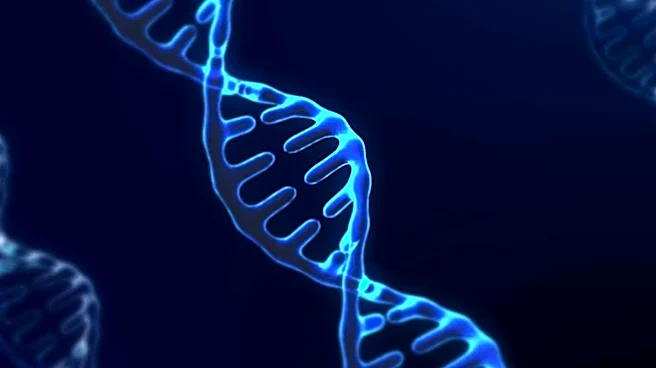
A team of researchers has unveiled a new technology called spatial high-throughput chromosome conformation capture (spatial Hi-C), which allows for the resolution of genome-wide three-dimensional chromatin architectures directly within intact tissue sections.
This advancement, reported in Nature Methods, addresses a long-standing limitation of conventional Hi-C techniques that required dissociating tissues, thereby destroying crucial spatial context. Spatial Hi-C utilizes a microfluidic device to perform Hi-C chemistry in situ on thin tissue sections, employing barcoded reagents to assign a unique spatial address to every chromatin contact captured. This method enables scientists to observe not only which DNA stretches interact but also their precise anatomical location within the brain. The technology has been validated in mouse embryos and adult mouse brains, demonstrating high fidelity and reproducibility. It has successfully distinguished various brain regions, such as the molecular layer, Purkinje layer, granular layer, and white matter, based on their distinct 3D genome architectures.
Why It's Important?
This development is crucial for understanding gene regulation and cellular function within complex tissues, particularly the brain. By preserving the spatial context of the genome, spatial Hi-C offers unprecedented insights into how the physical folding of DNA influences gene expression in different cell types and anatomical locations. This is significant because, despite all cells in an organism carrying the same genome, their diverse behaviors are largely determined by how their genome is folded within the nucleus. The ability to map these 3D genome architectures in situ can help unravel the 'physical grammar' of gene regulation, which is vital for understanding normal development and the origins of neurological diseases. It provides a more comprehensive view than previous methods, which either sacrificed spatial information or lacked the necessary throughput and resolution. This technology could accelerate research into how regulatory architecture goes awry in pathological conditions.
What's Next?
The researchers anticipate applying spatial Hi-C to human tissue, pathological specimens, and models of neurological diseases. This will allow for a deeper understanding of how regulatory variants exert their effects within specific tissue contexts, potentially pinpointing the exact locations where disease-associated non-coding variants contribute to pathology. The data and code from the study have been made publicly available, along with the protocol and microfluidic chip design, lowering the barrier for other laboratories to adopt and further develop this framework. As the technology matures and its resolution improves, it is expected to transform the study of the 3D genome from an abstract concept in dissociated cells to an anatomically precise object that can be analyzed layer by layer, lobule by lobule, and spot by spot, paving the way for new discoveries in neurobiology and beyond.
Beyond the Headlines
The ethical implications of this technology primarily revolve around its potential use in understanding and manipulating complex biological systems. While the immediate focus is on research, the ability to precisely map and understand genome folding in specific tissue contexts could eventually lead to advanced diagnostic tools or even therapeutic interventions for diseases linked to aberrant chromatin architecture. However, such applications would necessitate careful ethical consideration regarding genetic privacy, potential for unintended consequences, and equitable access to these advanced technologies. Culturally, this represents a significant leap in our understanding of the fundamental mechanisms of life, reinforcing the idea that biological function is deeply intertwined with spatial organization. The open-sourcing of the methodology promotes collaborative scientific advancement, fostering a culture of shared knowledge and accelerating the pace of discovery in genomics and neurobiology.