



What's Happening?
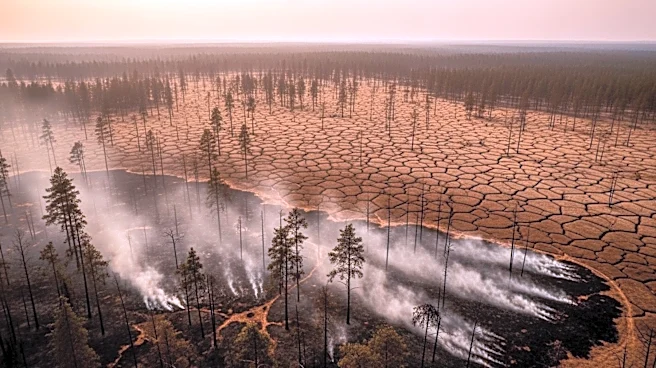
Wildfires in Georgia have intensified, destroying approximately 90 homes and prompting widespread evacuations. The fires, exacerbated by ongoing drought and hurricane debris, have spread rapidly across Brantley, Echols, and Clinch counties. The Brantley Highway
82 fire has burned over 5,500 acres, while the Pineland Road fire has engulfed more than 32,000 acres. Governor Brian Kemp has declared a state of emergency for 91 counties, implementing a 30-day burn ban and mobilizing state and federal resources. The fires have led to air quality warnings across the Southeast, with smoke affecting areas as far as Columbia, South Carolina.
Why It's Important?
The escalation of wildfires in Georgia underscores the growing threat of such disasters in the southeastern U.S., traditionally less affected than the West. The destruction of homes and displacement of residents highlight the immediate human and economic impacts. The fires strain local resources and necessitate federal intervention, raising questions about preparedness and response capabilities. The situation also points to broader environmental concerns, including the role of climate change in increasing the frequency and severity of wildfires. The need for comprehensive disaster management strategies is evident to mitigate future risks and protect vulnerable communities.
What's Next?
Efforts to contain the fires are ongoing, with federal assistance in the form of Fire Management Assistance Grants. The state of emergency allows for the mobilization of additional resources, including the Georgia National Guard. Residents in affected areas are urged to follow evacuation orders and safety guidelines. The persistent drought and weather conditions suggest that the fire risk will remain high, requiring continued vigilance and response efforts. Long-term, there may be discussions on improving infrastructure and policies to better handle such natural disasters and address the underlying environmental factors contributing to their occurrence.