
What's Happening?
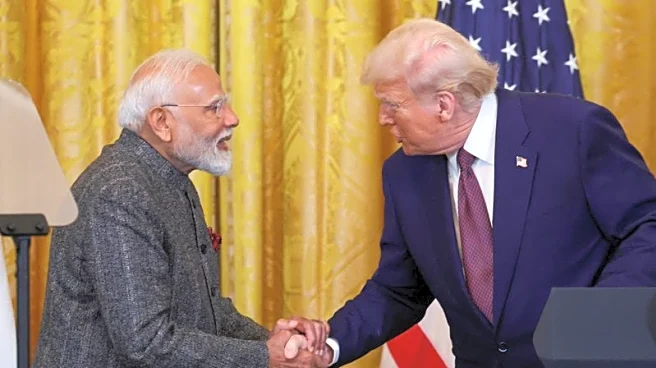
India and the United States have introduced an interim trade framework aimed at reducing tariffs on Indian exports and expanding access to the American market. The agreement, announced on Friday, lowers
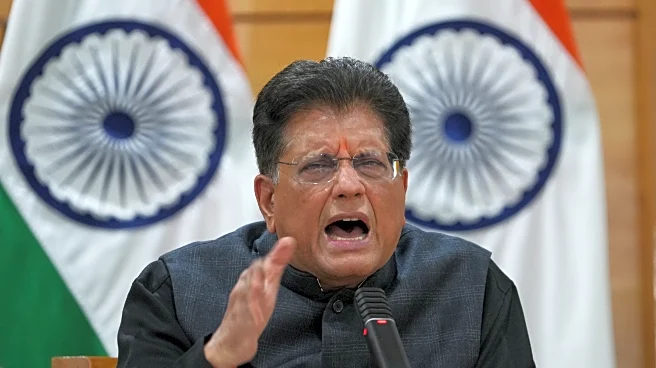
U.S. duties on Indian exports from 50% to 18%. It also provides sector-wide opportunities while safeguarding India's sensitive agriculture and dairy sectors. Commerce Minister Piyush Goyal highlighted that the deal could unlock a $30 trillion market for Indian exporters, particularly benefiting MSMEs, farmers, and fishermen. The framework includes India's commitment to purchase $500 billion worth of U.S. goods over the next five years, covering sectors such as energy, high-tech equipment, and defense. Additionally, the agreement addresses non-tariff barriers, with India pledging to resolve restrictions on U.S. medical devices and ICT goods within six months.
Why It's Important?
The interim trade framework is significant as it offers immediate relief to Indian exporters by reducing tariffs, which is expected to ease pressure on sectors driven by MSMEs. The protection of India's agriculture and dairy sectors ensures that local farmers remain unaffected by the trade changes. The agreement also aligns with India's broader trade strategy, complementing existing and concluded free trade agreements with Europe, the GCC, and the United Kingdom. By committing to substantial imports from the U.S., India aims to meet its growing investment needs, particularly in the energy sector. The framework sets the stage for a more comprehensive bilateral trade agreement, potentially enhancing India's strategic position in global trade.
What's Next?
Some elements of the trade framework remain under negotiation, including tariffs on steel and aluminum, and the final legal text of the agreement. The detailed agreement may take several more months to finalize. The framework includes rules-of-origin provisions to ensure that preferential tariff treatment applies only to goods genuinely produced in India or the U.S., preventing third-country routing. Analysts suggest that the interim pact lays the groundwork for a broader and more durable bilateral trade agreement, contingent on Indian industries improving cost and quality competitiveness.