







What's Happening?
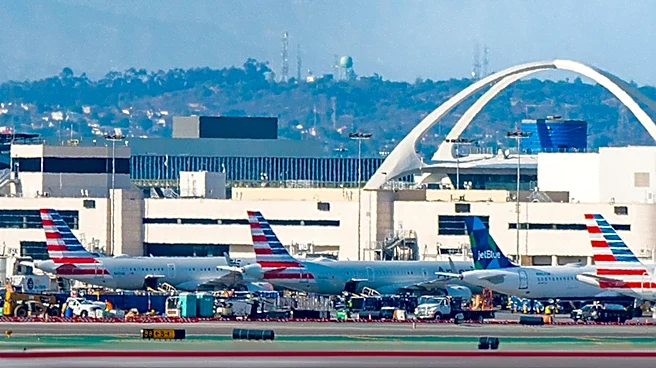
An American Airlines flight, number 618, traveling from Dallas-Fort Worth International Airport to Newark, New Jersey, was diverted to Baltimore-Washington International Thurgood Marshall Airport (BWI) on Thursday due to a disruptive passenger. The passenger,
identified as Arthur Lundeen, 67, of Arizona, allegedly became unruly in first class. According to a passenger, Michelle Ng Reyes, the man was initially restrained by other passengers before flight attendants intervened. He was reportedly duct-taped to his seat and secured with zip ties. Maryland Transportation Authority (MDTA) police confirmed that officers observed the passenger restrained upon arrival. Lundeen was charged with disorderly conduct and second-degree assault for incidents that occurred aboard the aircraft at BWI-Marshall. The FBI Baltimore field office is investigating any incidents that took place while the plane was in the air.
Why It's Important?
This incident highlights the ongoing challenge airlines and law enforcement face in managing disruptive passengers, which can significantly impact flight operations and passenger safety. Diversions like this incur substantial costs for airlines, including fuel, landing fees, and potential compensation for delayed passengers. More importantly, such events can create a stressful and potentially dangerous environment for both crew and fellow travelers. The involvement of the FBI underscores the seriousness with which authorities view in-flight disturbances, particularly those that may involve assault or other federal offenses. The incident also brings attention to the role of passengers in assisting crew members during emergencies, as seen by the initial restraint of the unruly individual by other travelers.
What's Next?
The incident is currently under investigation by the FBI Baltimore field office, which will determine if any federal charges are warranted for actions that occurred during the flight. Arthur Lundeen faces charges of disorderly conduct and second-degree assault from MDTA police. The outcome of these investigations and charges could set precedents for how similar incidents are handled in the future. American Airlines will likely review its protocols for managing disruptive passengers and may cooperate with authorities in their investigations. This event could also prompt further discussions within the airline industry and among regulatory bodies regarding enhanced measures to prevent and address unruly passenger behavior, potentially leading to stricter penalties or improved training for flight crews.
Beyond the Headlines
The increasing frequency of disruptive passenger incidents on flights raises broader questions about air travel etiquette, mental health support for passengers, and the effectiveness of current security measures. While the immediate focus is on the legal consequences for the individual involved, the incident also reflects societal tensions that can manifest in confined spaces like an airplane cabin. The use of duct tape and zip ties by passengers and crew, while effective in this instance, also sparks debate about appropriate restraint methods and the legal liabilities involved. This event could contribute to a larger conversation about passenger screening processes, the availability of resources for individuals experiencing distress during travel, and the psychological impact of such events on both passengers and airline staff.