







What's Happening?
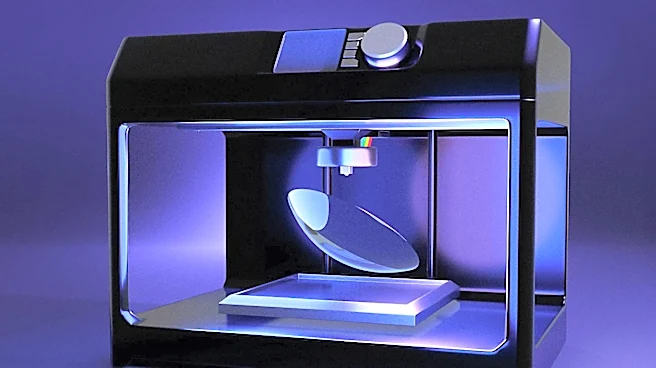
Nanochon, a medical device company, has successfully treated the first patient in its First-in-Human (FIH) clinical study for Chondrograft™, a novel 3D-printed implant designed to treat articular cartilage defects in the knee. The procedure was performed
by Dr. Juan Osorio and Dr. Emilio Tufiño at The Panama Clinic in Panamá. This prospective study aims to evaluate the safety and performance of Chondrograft™ in patients aged 22 to 60 who have not responded to conservative treatments and have one or two femoral condyle and/or trochlear cartilage lesions. The Chondrograft™ implant is intended to offer immediate mechanical support and a minimally invasive, bone-sparing solution for patients with cartilage damage who are not yet candidates for joint replacement surgery. Nanochon's co-founder and CEO, Ben Holmes, highlighted the rapid enrollment of the first patient as an indicator of the significant unmet clinical need in cartilage repair.
Why It's Important?
Articular cartilage injuries represent a major challenge in orthopedic medicine, often leading to chronic pain, reduced mobility, and progressive joint degeneration. Current treatments frequently involve lengthy rehabilitation and may not restore durable, functional cartilage tissue, potentially leading to the need for revision surgeries or knee replacements, especially in younger patients. Chondrograft™ offers a potential breakthrough by providing a regenerative approach that could delay or eliminate the need for such invasive procedures. The U.S. Food and Drug Administration (FDA) has granted Nanochon Breakthrough Device Designation, underscoring the potential of this technology to address a critical unmet medical need. If successful, this implant could significantly improve the quality of life for many individuals suffering from cartilage damage, reduce healthcare costs associated with repeated interventions, and establish a new standard of care in orthopedic treatment.
What's Next?
Following the completion of the current First-in-Human study, Nanochon plans to initiate a Level 1 multi-center, randomized, controlled, pivotal clinical trial. This larger trial will be crucial for gathering comprehensive clinical evidence to support the broader adoption and market entry of Chondrograft™. The data collected from the FIH study will inform the design and execution of this subsequent pivotal study. Successful outcomes in these trials could lead to regulatory approval and widespread availability of the Chondrograft™ implant, potentially transforming the treatment landscape for cartilage injuries. Continued research and development will likely focus on refining the implant and expanding its application to a wider range of cartilage defects.
Beyond the Headlines
The development of Chondrograft™ highlights a broader trend in medical innovation towards regenerative medicine and personalized healthcare solutions. The use of 3D printing technology in creating this implant signifies a shift towards more customized and precise medical devices, moving away from one-size-fits-all approaches. This technology could pave the way for other bio-printed implants and tissues, offering new possibilities for repairing and regenerating damaged body parts. Furthermore, the focus on minimally invasive, bone-sparing procedures reflects an evolving understanding of patient care, prioritizing interventions that preserve natural anatomy and function while minimizing recovery time and complications. The success of Chondrograft™ could also stimulate further investment and research into biomaterials and advanced manufacturing techniques for medical applications.