



What's Happening?
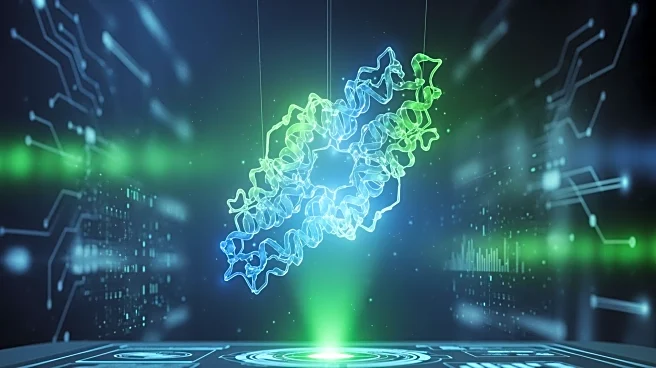
Recent advancements in protein mapping within human cells are being driven by the integration of AI-driven modeling with structural biology. This development is enhancing the understanding of protein functions and supporting the creation of next-generation
diagnostic tools. Structural biology, which examines the three-dimensional structures of biological macromolecules, is becoming more accessible and is poised to enter mainstream diagnostics. This shift is expected to enable more accurate predictions of patient responses to therapies and transform how clinicians detect and manage diseases. Additionally, the convergence of data from patient wearables with clinical testing is creating opportunities for multi-omics diagnostics, which combine genomics, proteomics, and other data for comprehensive insights. Multi-cancer detection tests, which aim to detect signals from multiple cancer types using a single sample, are also a focus, although challenges such as reimbursement hurdles and infrastructure for follow-up care remain.
Why It's Important?
The integration of AI and structural biology in diagnostics represents a significant leap forward in personalized medicine. By improving the accuracy of disease detection and patient response predictions, these advancements could lead to more effective and tailored treatment plans. The potential for multi-omics diagnostics to provide comprehensive insights into patient health could revolutionize the healthcare industry, making diagnostics more accessible and personalized. The focus on multi-cancer detection tests highlights the ongoing efforts to catch cancer earlier and improve survival outcomes, which could have a profound impact on public health. However, the challenges of data privacy, reimbursement, and infrastructure need to be addressed to fully realize these benefits.
What's Next?
As these technologies continue to develop, the healthcare industry will need to navigate the complexities of integrating AI and structural biology into existing systems. This includes addressing data privacy concerns and ensuring that the necessary infrastructure is in place to support new diagnostic tools. The industry will also need to work on overcoming reimbursement hurdles to make these advancements widely accessible. Continued investment in multi-cancer detection and other innovative diagnostic tools is expected, as companies remain confident in their potential to transform healthcare.