



What's Happening?
The Department of Homeland Security (DHS) remains partially shut down as Congress enters a two-week recess, with no resolution in sight. The shutdown, now in its seventh week, is exacerbated by divisions within the Republican Party. Senate Republicans
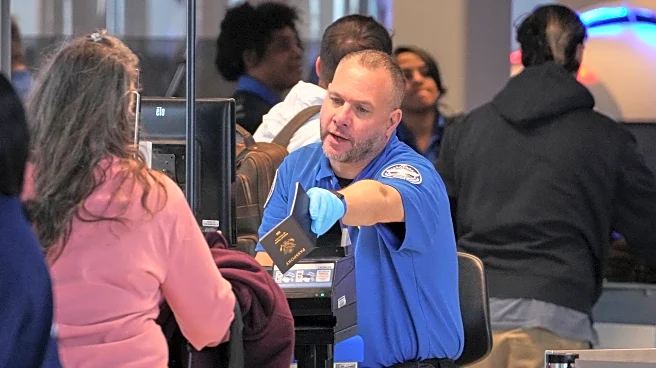
had previously reached a deal with Democrats to fund DHS, excluding Immigration and Customs Enforcement (ICE) and Border Patrol, but this was rejected by House Republicans. The House passed a stopgap measure to fund DHS through May 22, but it lacks support in the Senate. President Trump has rerouted federal funds to pay Transportation Security Administration (TSA) workers, easing some pressure but not resolving the broader funding issue.
Why It's Important?
The ongoing shutdown of DHS has significant implications for national security and federal operations. The lack of funding affects cybersecurity professionals and other critical DHS functions, potentially compromising national security. The political stalemate highlights deep divisions within the Republican Party and between Congress and the White House. The situation underscores the challenges of bipartisan cooperation in addressing essential government funding, with potential impacts on public safety and federal employee livelihoods.
What's Next?
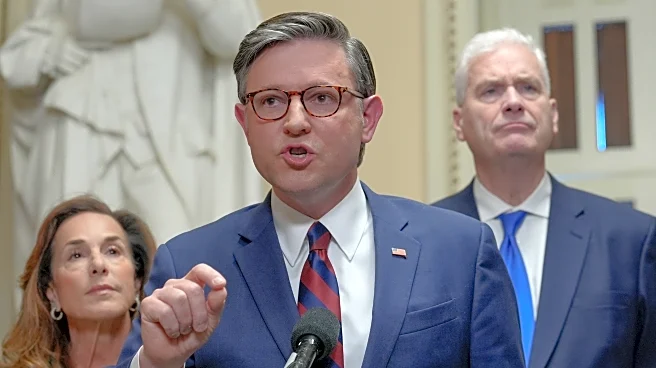
With Congress on recess until mid-April, immediate resolution seems unlikely. Senate Majority Leader John Thune has indicated that the Senate will not reconvene unless a viable funding proposal is on the table. The White House is urging Congress to return and resolve the funding impasse. The continued shutdown may lead to increased public pressure on lawmakers to find a solution, especially as federal employees remain unpaid and critical DHS functions are disrupted.