





What's Happening?
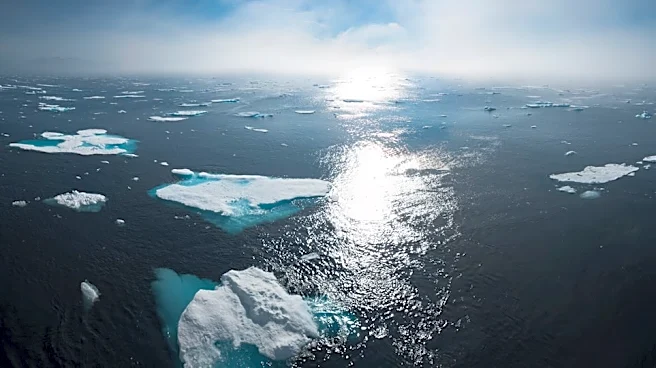
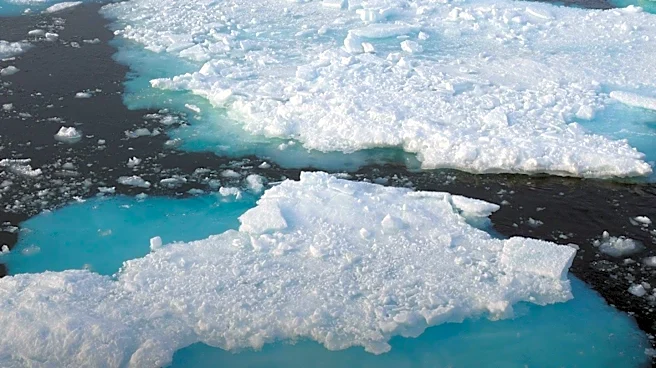
A new NASA-led study indicates that the Arctic sea ice melt season, which had been dramatically lengthening for decades, has unexpectedly stabilized since around 2010. While the melt season is currently about 40 days longer than it was in 1979, most of
this increase occurred before 2010. Since then, the average length of the melt season has remained relatively unchanged, despite year-to-year fluctuations. Researchers analyzed satellite observations from 1979 to 2023 to track the timing of spring melt and autumn refreeze. The study found that the lengthening trend was primarily driven by sea ice freezing later in the year, rather than melting earlier in the spring. Linette Boisvert, an ice scientist at NASA’s Goddard Space Flight Center and co-author of the study, noted that the decline in sea ice thickness and extent observed in the 2000s appears to have paused for now.
Why It's Important?
This stabilization in the Arctic melt season length is significant because it suggests a potential shift in the dynamics of Arctic climate change. For years, the continuous lengthening of the melt season has been a key indicator of global warming and its impact on polar regions. The previous rapid ice loss in the 2000s, driven by reduced ice cover exposing darker ocean water that absorbed more sunlight, delayed freezing and extended the melt season. The current stabilization, attributed to changing cloud patterns reducing sunlight reaching parts of the Arctic Ocean, indicates that annual weather patterns are now exerting a stronger influence on the melt season. This finding is crucial for refining climate models and understanding the complex interplay of factors affecting the Arctic, which in turn influences global weather patterns and sea levels. It highlights the need for continuous monitoring and research to differentiate between temporary stabilization and a long-term trend.
What's Next?
The study emphasizes the critical need for continued satellite observations of Arctic sea ice and the energy balance that governs its growth and melting. Researchers caution that the apparent stabilization might be temporary. The Arctic region continues to warm at a rate nearly four times faster than the global average, and the remaining sea ice is considerably thinner than it was decades ago. Further thinning of thick Arctic ice, particularly north of Greenland and the Canadian Arctic Archipelago, could trigger another period of rapid sea ice loss and potentially extend the melt season once more. Future research will focus on understanding whether this stabilization represents a lasting change or merely a pause before another phase of rapid transformation, and how these shifts will impact global climate systems and ecosystems.
Beyond the Headlines
The unexpected stabilization of the Arctic melt season length introduces a nuanced perspective into the ongoing climate change narrative. While the Arctic continues to experience significant warming, this finding suggests that the immediate drivers of melt season length are becoming more complex, with atmospheric effects playing a more dominant role due to thinner and more vulnerable ice. This could have profound implications for indigenous communities, Arctic ecosystems, and global shipping routes. The increased variability in melt season length, influenced by annual weather patterns, makes long-term predictions more challenging. It also underscores the interconnectedness of Earth's systems, where changes in one region can have cascading effects globally. The study prompts a deeper examination of feedback loops and regional climate phenomena that might be mitigating or altering previously observed trends, urging a more granular approach to climate science and policy.