



What's Happening?
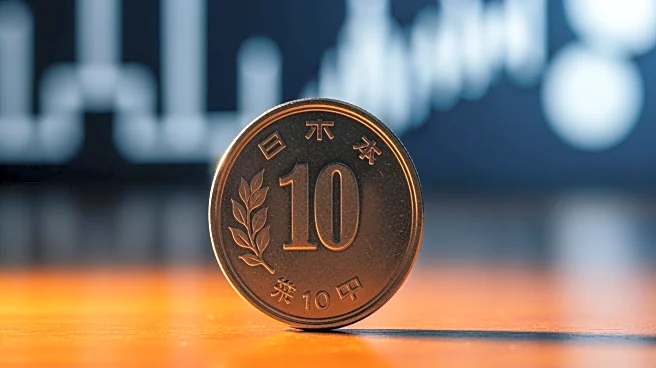
The Bank of Japan is expected to raise its benchmark interest rates to 0.75%, marking the highest level in 30 years. This decision comes as part of the central bank's policy normalization efforts, despite Japan's economy showing signs of weakness. The yen
has weakened over 2.5% against the dollar since Prime Minister Sanae Takaichi took office in October, initially opposing rate hikes but later softening her stance. The anticipated rate hike aims to strengthen the yen and control inflation, which has exceeded the Bank of Japan's target for 43 consecutive months. However, the move could further slow Japan's economy, which contracted by 0.6% in the third quarter.
Why It's Important?
The decision to raise interest rates is significant as it reflects Japan's attempt to balance inflation control with economic growth. A stronger yen could benefit importers by reducing costs but may hurt exporters by making Japanese goods more expensive abroad. The rate hike could also increase interest payments for the Japanese government, impacting fiscal policy. The financial markets are closely watching the Bank of Japan's commentary post-decision, as it will provide insights into future monetary policy directions and the central bank's approach to managing economic challenges.
What's Next?
Following the rate hike, attention will shift to the Bank of Japan's communication regarding the neutral or terminal rate, which balances inflation and growth. Governor Kazuo Ueda has indicated that estimating this rate is challenging, with a wide range of potential values. The central bank's guidance on this matter will be crucial for market participants. Additionally, potential interventions in the foreign exchange market by the finance ministry could influence the yen's trajectory. Stakeholders will be monitoring these developments closely to assess their impact on Japan's economic outlook.