






What's Happening?
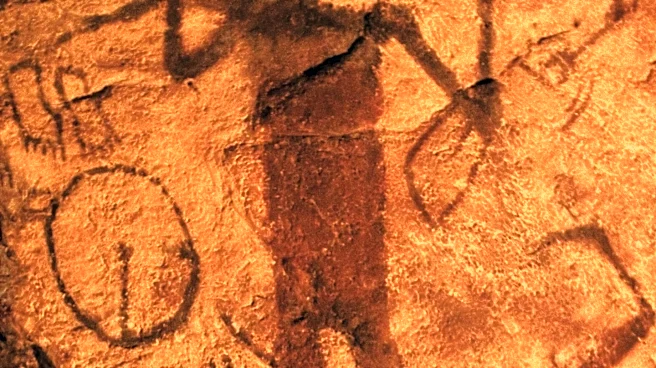
Chinese archaeologists have uncovered an ancient sanctuary within caves in the Altai mountains, specifically in the Xinjiang Uygur Autonomous Region. Utilizing hyperspectral photography, researchers were able to identify previously invisible symbols and
figures on the cave walls. The discoveries include a composition of 19 figures, notably a three-eyed man, and 51 additional drawings in a second cave. These findings are detailed in a publication in the journal npj Heritage Science, as reported by the portal “Science Mail.” The earliest drawings have been linked to the Chemurchek culture from the 3rd millennium BC, with other anthropomorphic images correlating with Bronze Age cultural traditions. A figure depicting a three-eyed man with a beard has drawn particular attention, as it is frequently associated with shamanic practices in Central Asia. Additionally, inscriptions in Tibetan and the symbol of the crossed vajra suggest connections to Tibetan Buddhism, dating back to the Yuan Dynasty (1271–1368).
Why It's Important?
The discovery of ancient shamanic imagery and other cultural artifacts in the Altai mountains provides significant insights into the historical and spiritual practices of early civilizations in Central Asia. The identification of the three-eyed man figure, often linked to shamanism, offers a deeper understanding of the spiritual beliefs and rituals prevalent in the region thousands of years ago. The presence of both Chemurchek culture drawings and later Tibetan Buddhist symbols indicates that these caves served as a sacred site for various peoples across different historical periods. This multi-layered cultural evidence highlights the enduring spiritual significance of the location and the evolution of religious and cultural traditions over millennia. Such findings contribute to the broader academic understanding of human migration, cultural exchange, and the development of complex belief systems in Eurasia, offering valuable data for anthropologists, historians, and archaeologists studying ancient societies.
What's Next?
Archaeologists will likely continue their analysis of the rock paintings and the nearby stone mound, which has a diameter of approximately 10 meters, to determine its relationship to the cave art. Further research will aim to establish a more precise chronology of the various layers of drawings and inscriptions, potentially revealing more about the interactions between different cultures that revered this site. The use of advanced imaging techniques like hyperspectral photography may lead to the discovery of additional hidden details or symbols. Future studies could also involve comparative analyses with other archaeological sites in Mongolia and the Altai region to better understand the regional spread and evolution of shamanic and Buddhist practices. The findings may also prompt further exploration of other caves and ancient sites in the Xinjiang Uygur Autonomous Region to uncover more evidence of early human activity and spiritual expression.
Beyond the Headlines
The discovery transcends mere archaeological interest by offering a tangible link to the ancient spiritual landscape of Central Asia. The recurring reverence for this site by diverse cultures, from the Chemurchek to those influenced by Tibetan Buddhism, underscores the universal human need for spiritual connection and sacred spaces. The figure of the three-eyed man, often associated with heightened perception and spiritual insight in shamanic traditions, speaks to a profound engagement with the unseen world. This continuity of spiritual practice across millennia suggests a deep-seated cultural memory and transmission of sacred knowledge. The site serves as a powerful reminder of the rich, complex tapestry of human belief systems and their enduring impact on cultural identity and historical development, offering a window into the spiritual foundations that shaped early societies in this pivotal Eurasian crossroads.