







What's Happening?
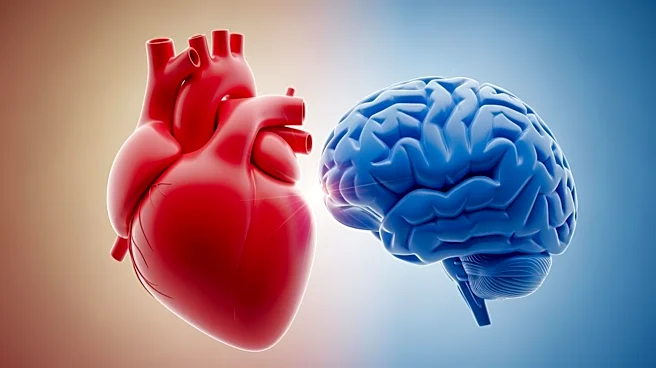
A recent study conducted by researchers at Royal Holloway, University of London, has found that emotions such as anger and disgust, when politically induced, are experienced differently in the body compared to similar emotions in everyday life. The study involved
nearly 1,000 participants who were asked to identify where and how intensely they felt emotions like anger, disgust, and hope on a body-outline diagram. Participants then repeated the exercise while considering politically charged words related to issues such as terrorism and crime. The results showed that politically linked emotions often resulted in more intense bodily sensations, particularly in the torso and limbs, compared to non-political emotions. This suggests that political emotions may mobilize individuals more effectively, potentially spurring them into action.
Why It's Important?
The findings of this study are significant as they highlight the unique impact of political emotions on individuals' physical and psychological states. Understanding these differences can provide insights into how political engagement is driven by emotional responses. The study suggests that politically induced emotions may encourage collective action, as individuals feel a sense of agency and motivation to address larger societal issues. This has implications for how political campaigns and movements can harness emotions to mobilize support and drive change. Additionally, the research underscores the importance of emotional awareness in maintaining mental well-being amidst the often overwhelming nature of political discourse.
What's Next?
The study opens avenues for further research into how emotional awareness and regulation can be used to mitigate the negative effects of political emotions. Researchers like Lisa Quadt from the Brighton and Sussex Medical School suggest that training individuals to better understand their bodily responses to emotions could reduce feelings of overwhelm and promote constructive engagement. This could lead to the development of interventions aimed at helping people manage their emotional responses to political issues, potentially fostering a more informed and active citizenry.
Beyond the Headlines
The study also touches on the broader implications of how emotions influence decision-making and behavior. By recognizing the physical manifestations of political emotions, individuals may become more conscious of how these feelings affect their actions and choices. This awareness could lead to more deliberate and informed participation in political processes, reducing the likelihood of reactionary or impulsive decisions driven by emotional highs or lows.