






What's Happening?
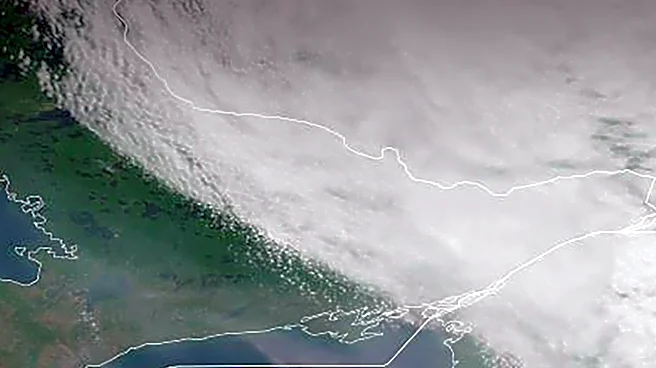
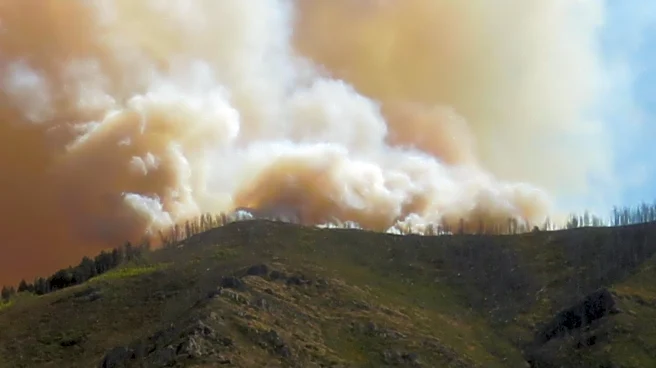
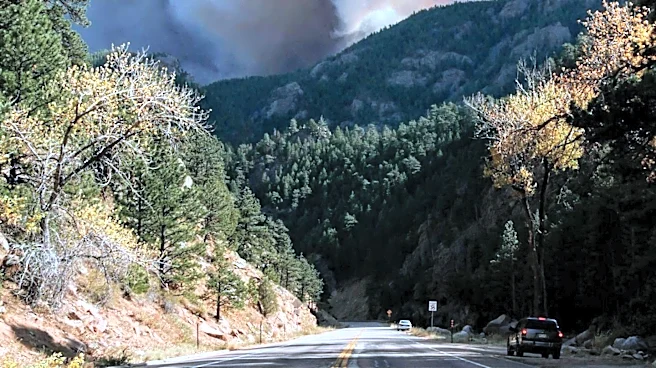
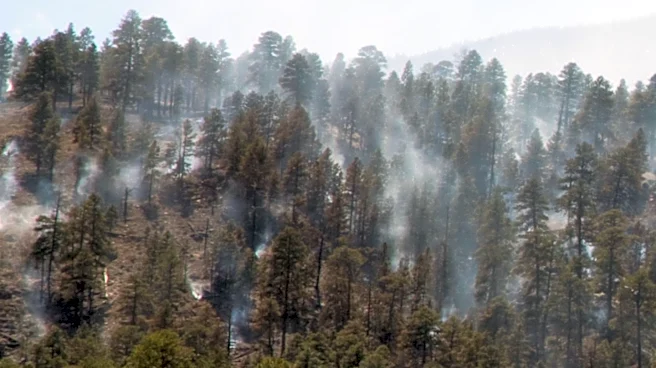
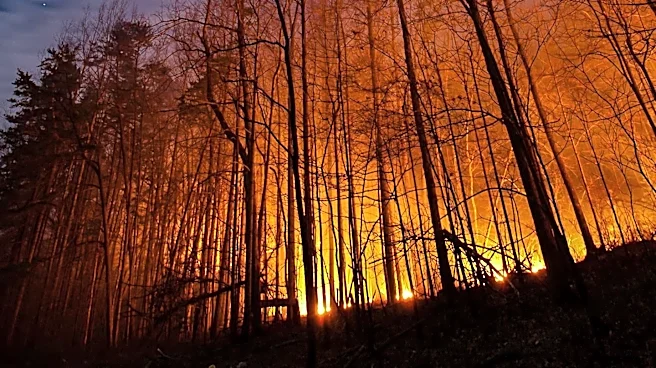
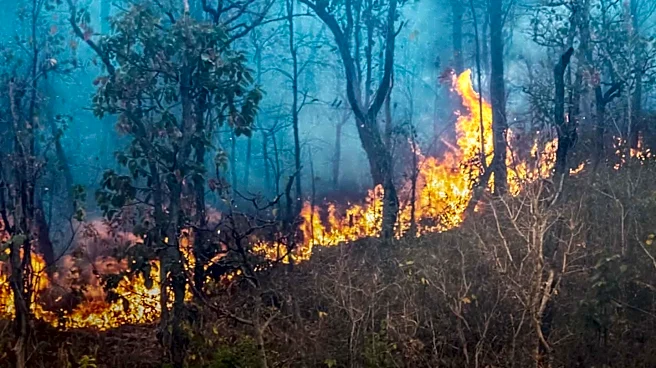
In British Columbia, Canada, residents are choosing to stay and defend their homes against ongoing wildfires, despite evacuation orders. The Fiftynine Creek wildfire in the Thompson Nicola Regional District has prompted evacuation orders for 193 properties
and alerts for 104 more. The Village of Clinton has issued a full evacuation order. Residents like Ira Robinson are determined to protect their properties using available equipment. John Gradek, a McGill University lecturer, emphasizes the need for Canada to rethink its wildfire response strategies, as current methods are outdated. He suggests a national wildfire strategy that includes better resource allocation and proactive measures to prevent fires from reaching communities.
Why It's Important?
The situation highlights the growing challenge of managing wildfires in the face of climate change, which is creating hotter and drier conditions. The increasing frequency and intensity of wildfires pose significant risks to communities, infrastructure, and ecosystems. The current approach, which focuses on evacuation, may not be sustainable as fires become more unpredictable. A coordinated national strategy could improve response times and resource distribution, potentially reducing the impact on affected areas. The involvement of Indigenous communities in forest management practices could also play a crucial role in mitigating wildfire risks.
What's Next?
The call for a national wildfire strategy suggests potential policy changes in Canada. Governments may need to invest in more firefighting resources, including aircraft and personnel, and develop plans for quicker response times. The integration of Indigenous knowledge and practices could be explored as part of a comprehensive approach to wildfire management. As climate change continues to influence weather patterns, the need for adaptive strategies will become increasingly urgent.