






What's Happening?
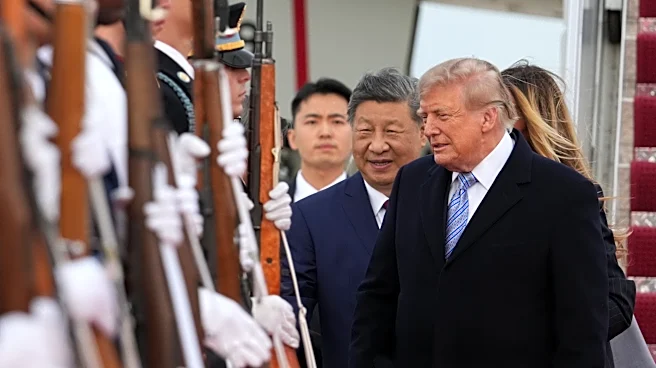
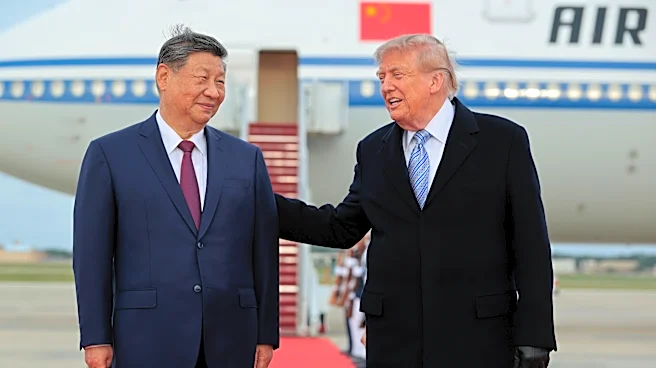
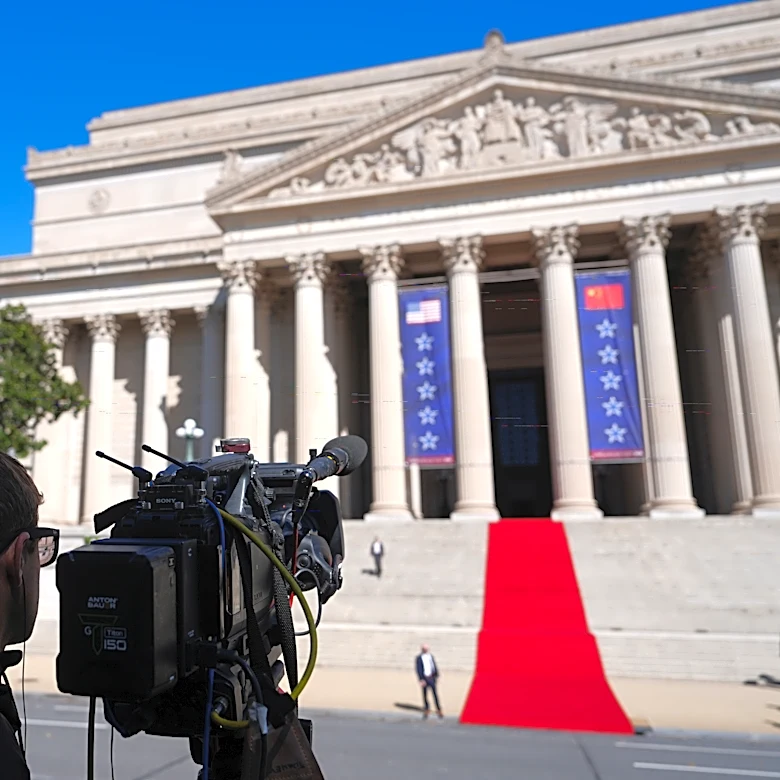
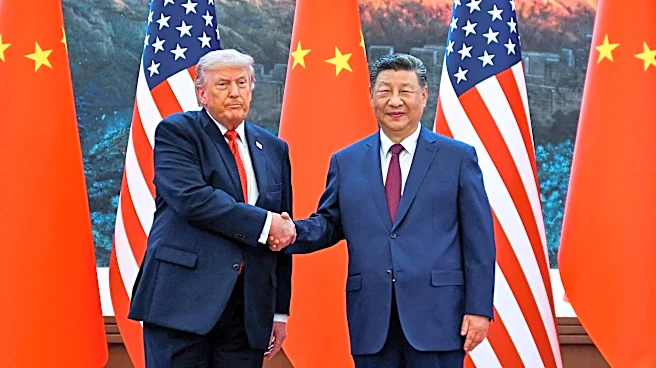
U.S. Representative John Moolenaar, Chairman of the Select Committee on China, issued a statement regarding CCP General Secretary Xi Jinping's visit to the National Archives Museum. Moolenaar contrasted American values of life and liberty with what he described
as the Chinese Community Party's values of tyranny, genocide, and oppression. He expressed hope that Xi Jinping's exposure to America's founding documents, such as the Declaration of Independence and the Constitution, would inspire him to end his 'cruel policies.' Moolenaar specifically called for freedom of expression, freedom of religion, and free, prosperous lives for the Chinese people. He emphasized the superiority of America's founding principles and efforts to form a more perfect union compared to the authoritarian rule of Xi Jinping and the Chinese Communist Party.
Why It's Important?
This statement from Representative Moolenaar underscores the ongoing ideological conflict between the United States and China, particularly concerning human rights and governance. As Chairman of the Select Committee on China, Moolenaar's remarks reflect a significant segment of U.S. political sentiment regarding China's internal policies and its global influence. The emphasis on 'tyranny, genocide, and oppression' highlights critical areas of contention that impact diplomatic relations, trade policies, and international alliances. Such strong condemnations can influence public opinion, shape legislative actions, and potentially lead to increased pressure on the Chinese government through sanctions or other diplomatic measures. The comparison of governmental systems also serves to reinforce American democratic values on the international stage, potentially influencing other nations' perspectives on engaging with both the U.S. and China.
What's Next?
Following Representative Moolenaar's statement, it is likely that the Select Committee on China will continue its scrutiny of the Chinese Communist Party's actions and policies. This could manifest in further legislative proposals aimed at addressing human rights concerns in China, reviewing U.S. companies' overseas investments, or strengthening alliances with countries that share similar democratic values. The statement may also prompt responses from Chinese officials, potentially escalating rhetorical exchanges between the two nations. Domestically, Moolenaar's remarks could galvanize support for a more assertive U.S. foreign policy toward China, influencing future congressional debates and policy decisions related to trade, technology, and national security. The ongoing dialogue between U.S. lawmakers and Chinese leadership, even through critical statements, remains a key aspect of the complex bilateral relationship.
Beyond the Headlines
The deeper implications of Representative Moolenaar's statement extend to the fundamental clash of political ideologies and human rights principles. By invoking the Declaration of Independence and the Constitution, Moolenaar frames the U.S.-China relationship not just as a geopolitical rivalry but as a contest of values. This perspective can influence how American foreign policy is formulated, potentially prioritizing human rights and democratic principles over purely economic or strategic considerations. It also highlights the role of legislative bodies in shaping international discourse and holding foreign governments accountable. The call for freedom of expression and religion for the Chinese people touches upon universal human rights, suggesting a long-term U.S. commitment to advocating for these rights globally, even in the face of significant geopolitical challenges. This ideological stance could also impact cultural exchanges and public perceptions of China within the U.S.