







What's Happening?
Speaker Julie Menin and the New York City Council have initiated the 2026-2027 participatory budgeting cycle, making over $22 million available for disbursement across 22 participating Council districts. This program encourages New Yorkers, aged 11 and older,
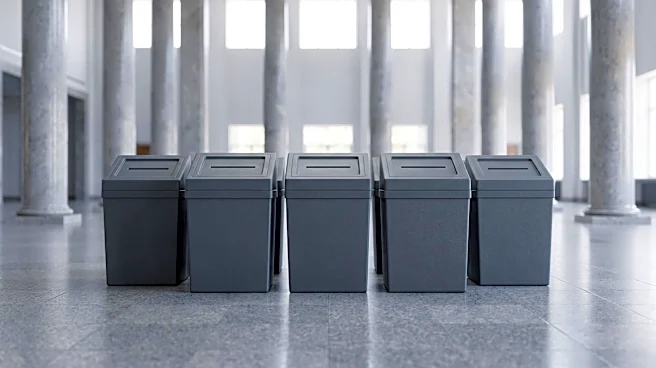
regardless of immigration or incarceration status, to submit project ideas for funding. Three new districts have joined this cycle: Council District 4, Council District 17, and Council District 21. Since its inception in 2011, participatory budgeting in New York City has funded over 1,200 capital projects, allocating more than $250 million. The process involves an idea collection phase, followed by city agencies transforming these ideas into official ballot projects. Constituents will then vote on their preferred projects during a nine-day period in Spring 2027, with winning projects included in the Fiscal Year budget finalized in June 2027.
Why It's Important?
This initiative is a significant step in enhancing local democracy and civic engagement within New York City. By directly involving residents in budget allocation, it empowers communities to address their specific needs and priorities, fostering a stronger sense of ownership and participation in local governance. The inclusion of individuals aged 11 and older, and those regardless of immigration or incarceration status, broadens the scope of civic participation, ensuring a more representative voice in decision-making. This direct democratic process can lead to more responsive and effective public spending, as funds are directed towards projects that genuinely reflect community desires, from expanding food access to investing in arts education or environmental improvements. It also serves as a model for other municipalities seeking to deepen citizen involvement in local government.
What's Next?
The current phase involves New Yorkers submitting their project ideas, with a deadline of December 4th. Following this, city agencies will work to develop these ideas into viable projects for the ballot. The voting period in Spring 2027 will be a critical stage where residents will directly choose which projects receive funding. The winning projects will then be incorporated into the Fiscal Year budget, which is finalized in June 2027. The continued expansion of participatory budgeting to new districts indicates a growing commitment to this model of direct democracy. The success of this cycle could further solidify participatory budgeting as a permanent fixture in New York City's governance, potentially inspiring other cities to adopt or expand similar programs to increase civic engagement and local accountability.
Beyond the Headlines
Participatory budgeting in New York City goes beyond mere financial allocation; it cultivates a culture of civic agency and responsibility. By giving residents a direct say in how their money is spent, it challenges the traditional top-down approach to governance and fosters a sense of collective ownership over public spaces and services. Council Member Justin Sanchez's remark that 'the best ideas for the Bronx come from the people who live here' encapsulates the philosophy that local knowledge is invaluable for effective policy-making. This process can also serve as an educational tool, teaching participants about budget constraints, community needs, and the complexities of public administration. Ultimately, it aims to build a more engaged and informed citizenry, transforming passive residents into active shapers of their neighborhoods and city, thereby strengthening the democratic fabric at a grassroots level.