

What's Happening?
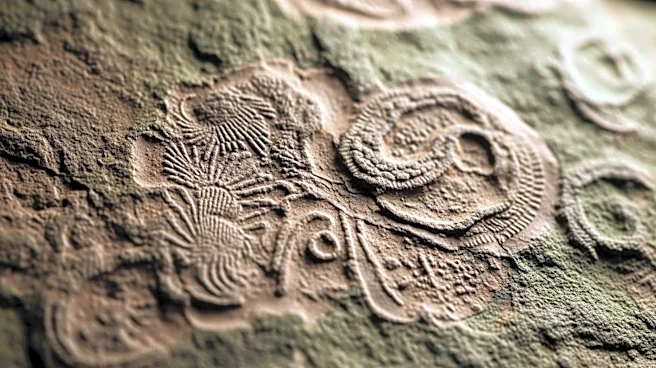
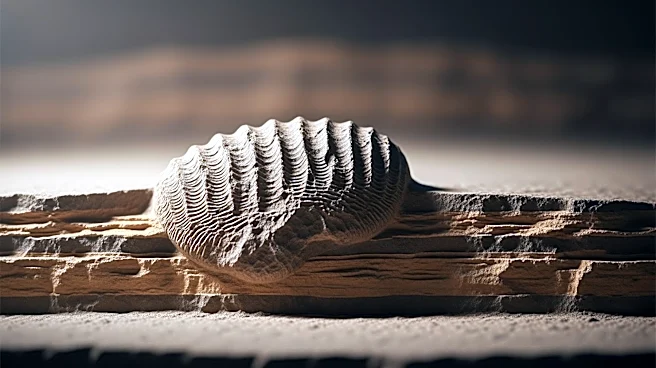
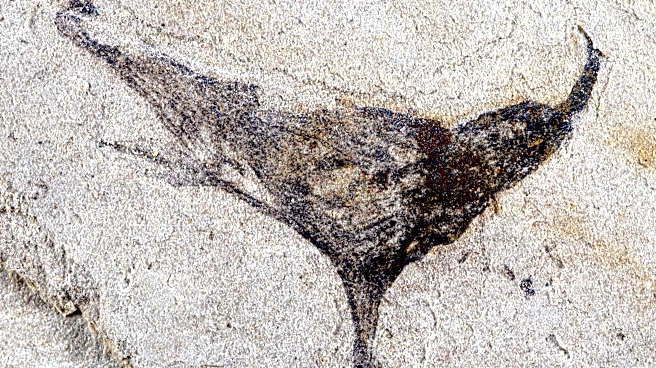
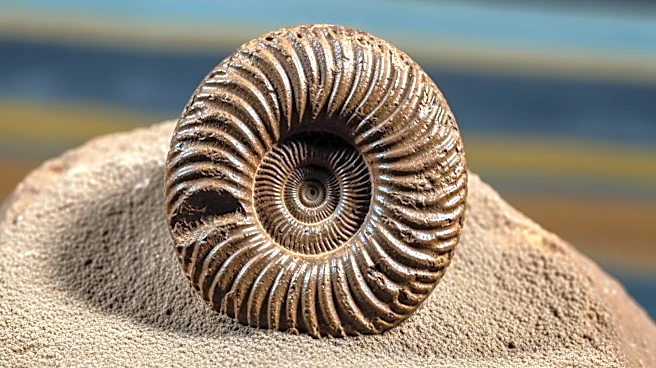
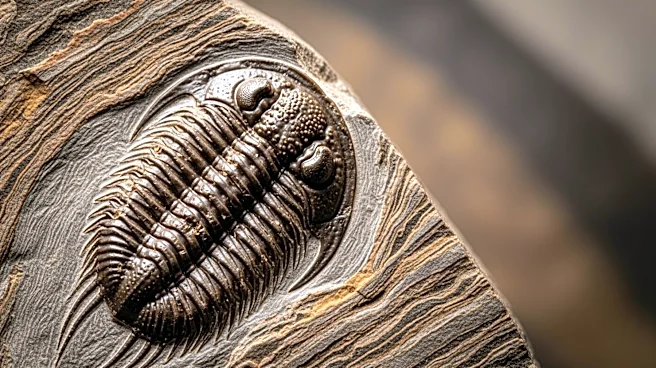
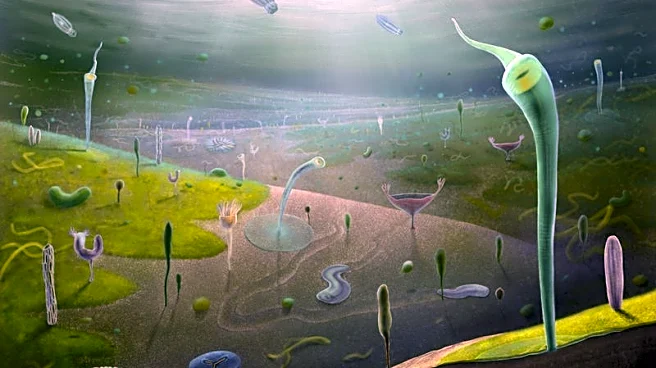
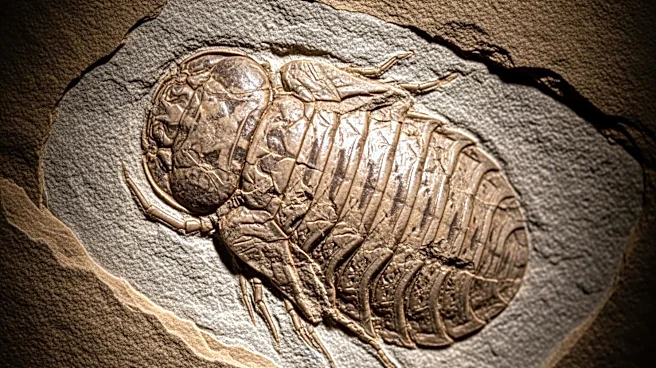
Scientists have uncovered over 700 fossils in Yunnan province, China, providing a glimpse into the evolution of complex animals from 539 million years ago. These fossils, dating back to the Ediacaran period, show a transition from simple, two-dimensional
life forms to more complex, three-dimensional creatures. This discovery challenges previous beliefs that such complex life forms only emerged during the Cambrian period, approximately 4 million years later. The study, published in the journal Science, highlights the development of animals with bilateral symmetry, a trait common in modern animals. This finding offers new insights into the 'rocks versus clocks' debate in paleontology, suggesting a closer alignment between fossil evidence and genetic analysis of evolutionary timelines.
Why It's Important?
This discovery is significant as it reshapes our understanding of the timeline of animal evolution, suggesting that complex life forms emerged earlier than previously thought. The presence of bilateral symmetry in these early fossils indicates a crucial evolutionary step towards the diversity of life seen today. This research could impact the field of paleontology by providing evidence that supports genetic analyses of evolutionary timelines, potentially resolving longstanding debates. Understanding the early development of complex life forms can also offer insights into the conditions that facilitated such evolutionary leaps, which is essential for comprehending the history of life on Earth.
What's Next?
The discovery opens new avenues for research into the factors that drove the rapid diversification of life during the Ediacaran and Cambrian periods. Scientists are now interested in exploring the environmental and genetic conditions that enabled this evolutionary transition. Further studies may focus on the role of oxygen levels and genetic mutations in facilitating the emergence of complex life. Additionally, researchers aim to investigate the interactions between early life forms and their environments to understand how these dynamics influenced evolutionary pathways.
Beyond the Headlines
The findings have broader implications for understanding the interplay between life and Earth's systems. The emergence of complex animals likely altered biogeochemical cycles, impacting the planet's environment. This research underscores the importance of studying ancient life to comprehend how biological and environmental factors have shaped Earth's history. It also highlights the potential for future discoveries in other fossil-rich regions, which could further illuminate the evolutionary processes that have led to the current diversity of life.