






What's Happening?
A small number of schools in Florida and Georgia are set to pilot a new safety initiative involving the use of drones to respond to school shootings. This initiative, funded by state grants, will see schools like Deltona High School in Florida install
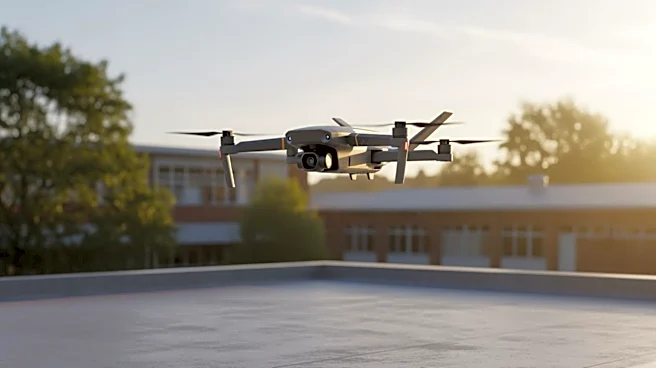
drones designed to distract and deter attackers. These drones, which are about the size of a pizza, can emit high-pitched noises, shoot nonlethal pepper balls, and ram into suspects. The drones will be stationed in ballistic boxes within school hallways and can be deployed by educators through an emergency alert system. The initiative is spearheaded by Campus Guardian Angel, a startup that manufactures and operates these drones. Despite the innovative approach, safety experts have raised concerns about the practicality and effectiveness of such technology in real-life scenarios.
Why It's Important?
The introduction of drones in school safety protocols represents a significant shift in how educational institutions address the threat of school shootings. This initiative could potentially transform school safety measures, offering a rapid response tool that could mitigate the impact of such incidents. However, the technology is unproven in actual emergencies, and its implementation raises questions about cost, effectiveness, and the potential for distraction from more traditional safety practices. The pilot program's success or failure could influence future policies and funding decisions related to school safety across the United States. Additionally, the initiative highlights the ongoing debate over the balance between technological solutions and fundamental safety practices in educational settings.
What's Next?
As the pilot program progresses, schools and lawmakers will closely monitor its effectiveness and practicality. The results could lead to broader adoption of drone technology in schools nationwide if proven successful. However, logistical challenges and the need for comprehensive safety strategies will remain critical considerations. The program's outcomes may also influence legislative decisions regarding funding and the integration of advanced technologies in school safety protocols. Stakeholders, including educators, parents, and policymakers, will likely engage in discussions about the ethical and practical implications of using drones in educational environments.
Beyond the Headlines
The use of drones in schools touches on broader issues of privacy, civil rights, and the militarization of educational spaces. As schools explore high-tech solutions to safety, they must also consider the potential impact on students' rights and the school environment. The initiative raises questions about the role of technology in addressing societal issues and the potential for unintended consequences. The debate over drones in schools reflects larger societal discussions about security, technology, and the balance between innovation and traditional practices.