





What's Happening?
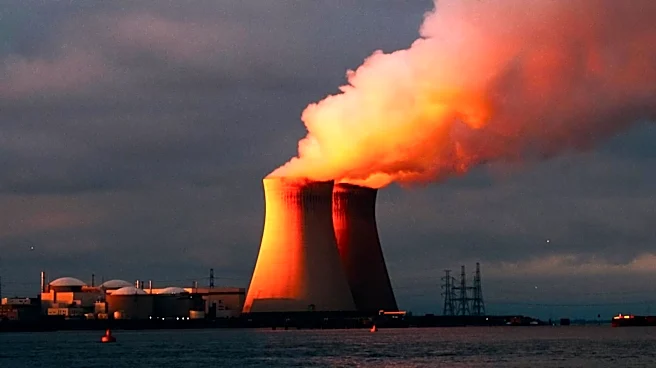
Canada is embarking on a significant shift in its nuclear energy strategy by planning to build small modular reactors (SMRs) that will rely on enriched uranium from foreign sources, including the United States, France, and Britain. This marks a departure
from Canada's historical reliance on its Candu reactors, which used domestically produced natural uranium. The first of these SMRs, the BWRX-300, is being constructed in Ontario and is expected to be operational by 2030. The decision to use foreign-enriched uranium has sparked debate about energy sovereignty and geopolitical risks, as it places critical parts of Canada's nuclear fuel supply chain in the hands of other countries.
Why It's Important?
The shift to foreign-enriched uranium for Canada's new reactors has significant implications for the country's energy sovereignty and security. By depending on external sources for nuclear fuel, Canada risks potential supply disruptions due to geopolitical tensions. This move also challenges the original rationale behind the Candu program, which was designed to ensure a self-reliant nuclear supply chain. The reliance on foreign suppliers could expose Canada to vulnerabilities in its energy infrastructure, affecting both national security and economic stability. Additionally, the decision could impact pension funds and other financial stakeholders involved in the nuclear industry.
What's Next?
As Canada proceeds with its SMR projects, discussions about establishing a domestic uranium enrichment industry may gain traction. However, such an initiative would require significant investment and regulatory oversight. Meanwhile, Ontario and other provinces will continue to evaluate the feasibility and economic viability of SMRs. The federal government plans to create a 'Nuclear Fuels Table' to explore future needs and opportunities in the nuclear sector. The outcome of these discussions could shape Canada's long-term energy strategy and its position in the global nuclear market.
Beyond the Headlines
The decision to rely on foreign-enriched uranium raises broader questions about Canada's commitment to energy independence and its ability to manage nuclear waste. The introduction of new reactor technologies could alter the volume and type of nuclear waste, necessitating updates to Canada's existing waste management plans. Furthermore, the move could influence Canada's international relations, particularly with countries involved in the nuclear supply chain. As the global energy landscape evolves, Canada's approach to nuclear energy will be closely watched by industry experts and policymakers.