




What's Happening?
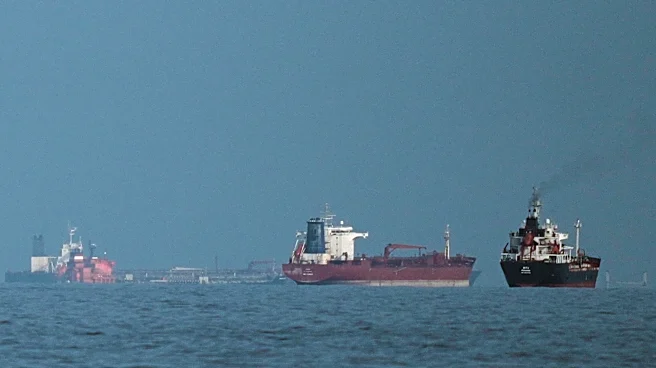
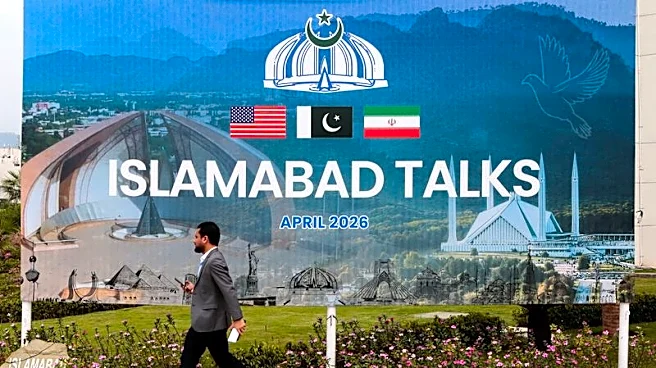
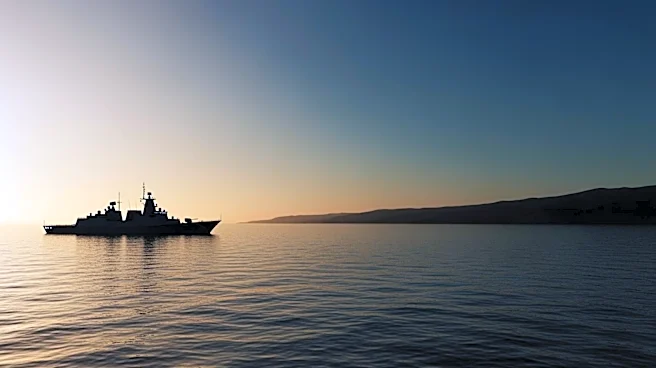
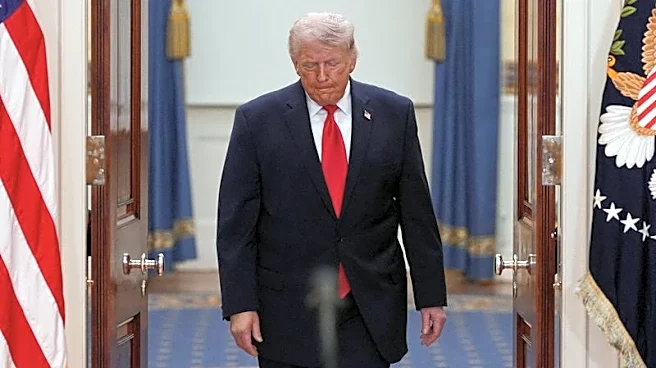
President Trump has announced that the United States will impose a naval blockade on Iranian ports, effective today at 10 a.m. ET. This decision follows unsuccessful peace talks between the U.S. and Iran, which failed to reach a breakthrough. The U.S. military's
Central Command confirmed the blockade, which aims to restrict ships traveling to or from Iran. Vice President Vance stated that the breakdown in negotiations was due to Iran's lack of commitment to not pursue nuclear weapons. The blockade is expected to increase pressure on Iran, which has been charging foreign ships up to $2 million to pass through the Strait of Hormuz, a crucial waterway for global oil transport.
Why It's Important?
The naval blockade on Iranian ports is likely to have significant implications for global oil prices, as Iran plays a key role in the oil market. By restricting access to the Strait of Hormuz, the U.S. aims to pressure Iran into making concessions regarding its nuclear ambitions. However, this move could further destabilize the region, as Iran has withstood weeks of heavy U.S. and Israeli bombing. The blockade may also impact potential peace talks, as it adds tension to an already volatile situation. The decision reflects the Trump administration's strategy to leverage economic pressure in diplomatic negotiations.
What's Next?
Israeli and Lebanese ambassadors are scheduled to hold ceasefire talks in Washington tomorrow, marking the first direct government-to-government discussions between the two countries since 1983. These talks could be influenced by the ongoing violence in Lebanon, where Israeli forces are targeting Iran-backed Hezbollah fighters. The outcome of these talks may affect regional stability and the broader geopolitical landscape. Additionally, the blockade's impact on global oil prices and international relations will be closely monitored by stakeholders.