






What's Happening?
Dr. Mike Eisenhauer, an interventional cardiologist, has announced his candidacy as an Independent for the Eastern District U.S. congressional seat (MT02), currently held by Troy Downing. Eisenhauer has successfully gathered the necessary signatures to
appear on the ballot. He is campaigning on a platform that aims to address hyper-partisanship and congressional gridlock, emphasizing his commitment to making decisions that he can explain to his Montana constituents. Eisenhauer, a retired Army Colonel, highlights his understanding of foreign policy and government budgeting, as well as the challenges facing rural healthcare in Montana. Whitehall Indivisible (WI) has hosted Eisenhauer, noting his willingness to engage with constituents and his approach to forming coalitions to achieve legislative goals. WI has also indicated that they have repeatedly invited incumbent Troy Downing to speak but have not received a response.
Why It's Important?
This independent challenge to an incumbent Republican in a U.S. congressional district highlights a growing sentiment among some voters for alternatives to traditional two-party politics. Dr. Eisenhauer's emphasis on reducing hyper-partisanship and his background as a medical professional and military veteran could resonate with voters seeking pragmatic solutions and a less polarized political environment. His campaign's focus on rural healthcare issues directly addresses critical concerns in Montana's communities, potentially influencing the debate on healthcare policy at a national level. The willingness of groups like Whitehall Indivisible to engage with independent candidates suggests a desire for broader political discourse and accountability from elected officials, which could impact voter turnout and engagement in the upcoming general election.
What's Next?
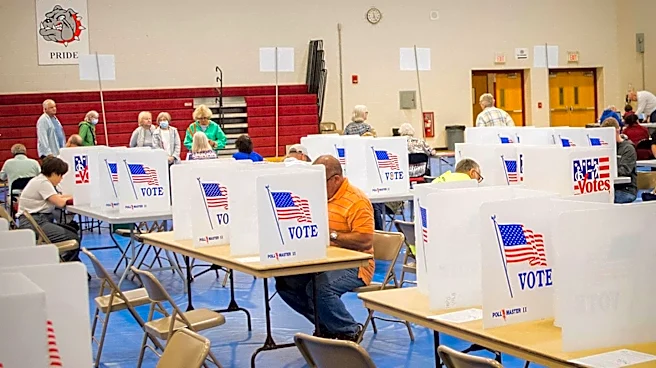
Dr. Mike Eisenhauer has publicly requested an in-person debate with incumbent Troy Downing, though a response has not yet been received. Whitehall Indivisible plans to continue hosting various candidates, including a Libertarian candidate for the U.S. Senate, to provide constituents with opportunities to learn about different platforms ahead of the general election. The organization also offers assistance with voter registration and status verification, indicating an ongoing effort to facilitate civic participation. The outcome of this independent challenge will depend on Eisenhauer's ability to gain traction against an incumbent and whether Downing chooses to engage in public debates, which could significantly shape voter perceptions and the dynamics of the MT02 congressional race.
Beyond the Headlines
The emergence of strong independent candidacies, such as Dr. Eisenhauer's, can signal a broader dissatisfaction with the established political system and a desire for more diverse representation. This trend could lead to increased scrutiny of the two major parties and their ability to address complex issues. If independent candidates gain more electoral success, it could encourage a shift in political strategies, potentially fostering more bipartisan cooperation or, conversely, leading to more fragmented political landscapes. The focus on local accountability and direct engagement with constituents, as championed by Eisenhauer and groups like Whitehall Indivisible, may also influence how future campaigns are conducted, emphasizing community-level concerns over national party platforms.