



What's Happening?
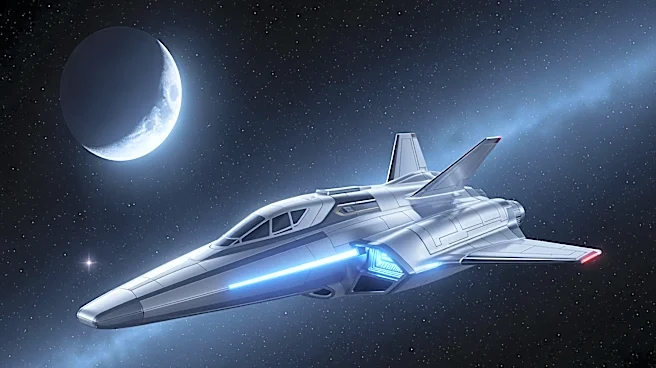
NASA's Artemis II mission has launched, marking a significant milestone in space exploration as four astronauts journey towards the Moon aboard the Orion spacecraft. The mission, which began on April 1, 2026, from Kennedy Space Center, is a 10-day test
flight aimed at validating NASA's modern deep-space systems. The crew, consisting of NASA astronauts Reid Wiseman, Victor Glover, Christina Koch, and Canadian Space Agency astronaut Jeremy Hansen, is tasked with testing life-support systems, communication links, and navigation capabilities in cislunar space. This mission represents the first crewed voyage beyond low-Earth orbit in over 50 years, bridging the gap between the Apollo era and future lunar exploration under the Artemis program.
Why It's Important?
The Artemis II mission is crucial for the future of human space exploration, as it tests the capabilities needed for sustainable lunar exploration and eventual missions to Mars. By successfully demonstrating the functionality of the Orion spacecraft in deep space, NASA is paving the way for future missions that will include lunar landings. This mission also highlights international collaboration, with Canadian astronaut Jeremy Hansen participating, showcasing the global effort in advancing space exploration. The success of Artemis II could reinforce U.S. leadership in space science and exploration, potentially influencing public policy and funding for future space endeavors.
What's Next?
Following the completion of the Artemis II mission, NASA will analyze the data collected to refine systems and procedures for future missions. The next step in the Artemis program is Artemis III, which aims to land astronauts on the lunar surface. This mission will build on the successes and lessons learned from Artemis II, further advancing the goal of establishing a sustainable human presence on the Moon. The outcomes of Artemis II will also inform planning for eventual crewed missions to Mars, as NASA continues to develop the technologies and strategies necessary for long-duration space travel.