






What's Happening?
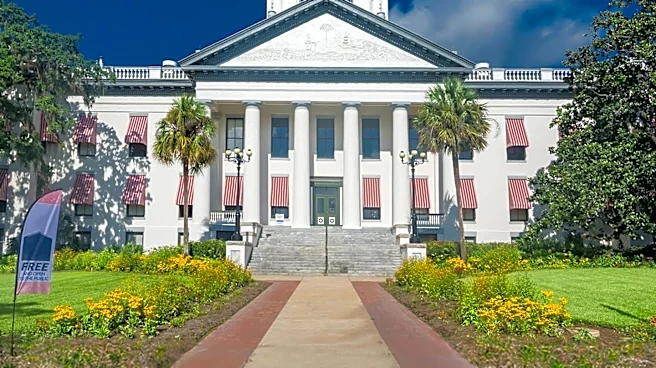
The Florida State Board of Education created a policy in June that aims to prevent undocumented students from enrolling in state public universities. This week, the Board of Governors is scheduled to meet and could potentially approve this policy, which
would significantly alter access to higher education for a specific demographic within Florida. The proposed ban follows a trend of stricter immigration-related policies being considered or implemented in various sectors across the state. This development has drawn attention from various stakeholders, including educational institutions, student advocacy groups, and civil rights organizations, as reported by WMNF 88.5 FM.
Why It's Important?
This potential ban carries significant implications for both undocumented students and the broader educational landscape in Florida. For undocumented students, it would effectively close off a crucial pathway to higher education, limiting their opportunities for social mobility and economic advancement. This could lead to a more marginalized population within the state, potentially impacting future workforce development and tax contributions. For public universities, such a policy could lead to decreased diversity, potential legal challenges, and a shift in their mission to serve all residents. Furthermore, it could influence the state's reputation as an inclusive educational environment and might affect federal funding or research opportunities if deemed discriminatory. The policy also raises questions about the role of education in fostering integration and opportunity for all residents, regardless of immigration status.
What's Next?
The immediate next step is the meeting of the Board of Governors this week, where they will consider approving the policy. If approved, the policy would likely face legal challenges from civil rights organizations and advocacy groups, potentially leading to protracted court battles. Universities would then need to implement new enrollment procedures to identify and exclude undocumented students, which could be complex and controversial. There could also be protests and demonstrations from student groups and community members. Conversely, if the Board of Governors rejects the policy, it would signal a different direction for higher education access in Florida, potentially leading to further discussions on how to support all students within the state's public university system. The decision will undoubtedly have lasting effects on Florida's educational and social fabric.
Beyond the Headlines
Beyond the immediate policy implications, the proposed ban on undocumented students in Florida's public universities touches upon deeper societal debates regarding immigration, access to education, and the definition of citizenship. It highlights the tension between state-level control over public services and federal immigration policies. Ethically, it raises questions about whether education should be a universal right or a privilege tied to legal status, and the potential for creating a permanent underclass. Culturally, such a ban could foster an environment of exclusion and fear, impacting the integration of immigrant communities. Economically, denying higher education to a segment of the population could lead to a less skilled workforce and reduced economic output in the long run. This policy is not just about university enrollment; it's about the future identity and values of Florida as a state.