





What's Happening?
Gilead Sciences, Inc. and its company Kite have announced that they will present 23 new data presentations, including seven oral presentations, at the 68th American Society of Hematology (ASH) Annual Meeting and Exposition, scheduled from December 12–15,
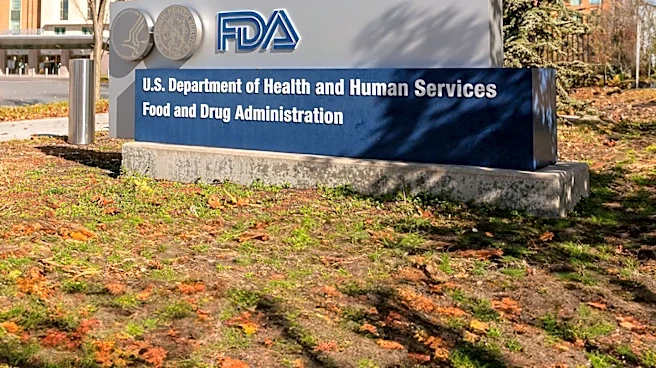
2026. These presentations will highlight significant advancements across Gilead and Kite’s pipeline and portfolio, focusing on treatments for blood cancers and autoimmune disorders. Key data includes 18-month minimum follow-up results for anitocabtagene autoleucel (anito-cel) in relapsed or refractory multiple myeloma (RRMM) from the pivotal Phase 2 iMMagine-1 study. This data forms the basis of a Biologics License Application (BLA) currently under review by the U.S. Food and Drug Administration (FDA), with a target decision date of December 23, 2026. Additionally, five-year follow-up data for Yescarta® (axicabtagene ciloleucel) in first-line high-risk large B-cell lymphoma (LBCL) will be presented, along with early clinical results for KITE-753 in B-cell lymphoma and gamgertamig (CM336/OM336) for autoimmune cytopenias.
Why It's Important?
The data presented by Gilead and Kite at ASH 2026 are crucial for advancing treatment options for patients with severe blood cancers and autoimmune diseases in the U.S. The maturing efficacy and safety data for anito-cel in RRMM, particularly its role in an FDA-reviewed BLA, could lead to a new therapeutic option for patients who have exhausted other treatments. The long-term follow-up for Yescarta® in high-risk LBCL reinforces its established role and provides further evidence of durable responses, which is vital for patient and physician confidence. The introduction of early clinical results for KITE-753 and gamgertamig signifies potential future breakthroughs, offering hope for patients with unmet medical needs. These developments could significantly impact the oncology and immunology markets, potentially shifting treatment paradigms and improving patient outcomes, while also influencing investment and research priorities within the biopharmaceutical sector.
What's Next?
The immediate next step for anito-cel is the FDA’s decision on its Biologics License Application, expected by December 23, 2026. A positive decision would make anito-cel available to patients with relapsed or refractory multiple myeloma, expanding treatment options in the U.S. For Yescarta®, the five-year follow-up data will further solidify its position as a standard-of-care therapy, potentially influencing clinical guidelines and broader adoption. KITE-753 and gamgertamig are in earlier stages of development, with gamgertamig expected to enter registrational studies in 2027. Future steps will involve continued clinical trials to confirm efficacy and safety, leading to potential regulatory submissions and commercialization. These advancements will be closely watched by healthcare providers, patients, and investors, as they represent significant progress in the fight against life-threatening diseases.
Beyond the Headlines
Beyond the immediate clinical implications, these presentations highlight the ongoing shift towards personalized and cell-based therapies in oncology and immunology. The focus on CAR T-cell therapies like anito-cel and Yescarta underscores a broader trend in medical research towards harnessing the body's own immune system to combat disease. The development of bicistronic CAR T-cell therapies like KITE-753, designed to target multiple antigens, represents an evolution in therapeutic strategy, aiming for more robust and durable responses. Furthermore, the exploration of CAR T-cell therapies for autoimmune diseases with gamgertamig suggests a potential expansion of these advanced treatments beyond cancer, opening new avenues for addressing a wider range of complex conditions. This continuous innovation raises ethical considerations regarding access, cost, and equitable distribution of these highly specialized and often expensive treatments.