




What's Happening?
Puerto Rico has enacted House Bill 641, now known as Law 102-2026, to address the growing threat posed by wild hogs to agriculture, food security, and public health. Authored by Representative Axel 'Chino' Roque Gracia, the law empowers the secretary
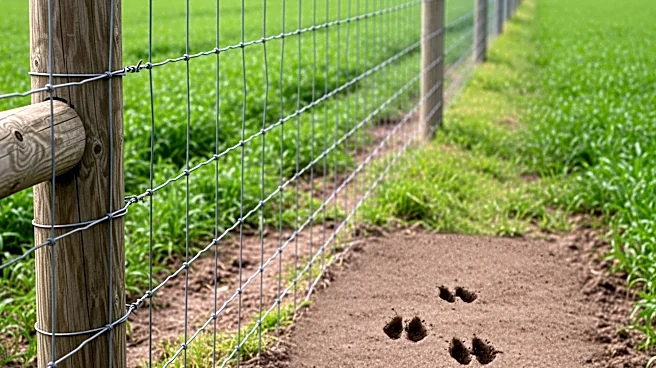
of the Department of Natural and Environmental Resources (DNER) to issue special non-sport hunting permits to farmers. These permits are intended to help control the wild hog population, which has been damaging crops and agricultural infrastructure across the island. The law also amends Regulation 6765 to include wild hogs in Appendix 2, a list of invasive and harmful species, under the population-control provisions of Article 16(a) of Puerto Rico’s Wildlife Act (Law 241-1999). The DNER secretary is authorized to collaborate with the Department of Agriculture and other agencies to manage and dispose of captured or hunted wild hogs.
Why It's Important?
The enactment of this law is significant as it addresses a long-standing issue that has affected Puerto Rican farmers, who have reported substantial losses due to wild hog activity. By controlling the wild hog population, the law aims to protect the island's agricultural sustainability and food security. This move is crucial for the economic development of Puerto Rico, as agriculture plays a vital role in the local economy. The legislation also highlights the importance of coordinated efforts between state and federal agencies to manage invasive species and protect natural resources. The law's implementation could serve as a model for other regions facing similar challenges with invasive species.
What's Next?
The next steps involve the DNER secretary working closely with the Department of Agriculture and other relevant agencies to implement the law effectively. This includes issuing hunting permits, coordinating the management and disposal of wild hogs, and taking additional actions as necessary. The success of these efforts will depend on the collaboration between government agencies and the farming community. Monitoring and evaluation will be essential to assess the law's impact on controlling the wild hog population and protecting agricultural resources. Stakeholders will likely continue to advocate for further measures if the current law does not sufficiently address the problem.