



What's Happening?
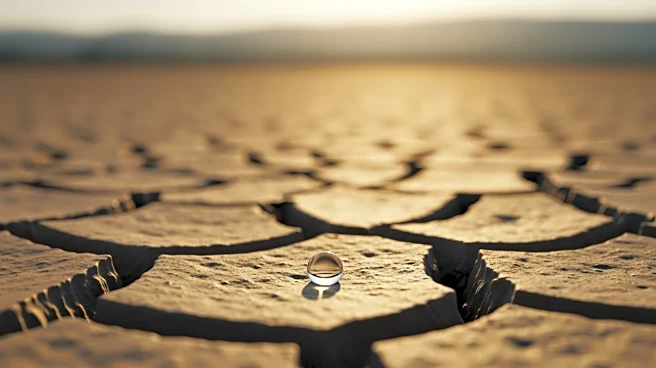
A new report from the World Bank has revealed that Earth's continents are losing significant amounts of fresh water annually, contributing to global sea level rise. The report, based on 22 years of data from NASA's GRACE mission, highlights the alarming
rate at which fresh water is disappearing due to factors such as accelerated snow and ice melt, permafrost thaw, and groundwater extraction. The report emphasizes that continental drying is a long-term decline in fresh water availability across large land masses, excluding meltwater from Greenland and Antarctica. The findings indicate that continents have surpassed ice sheets as the largest contributor to global sea level rise, with an annual loss of 11.4 trillion cubic feet of water, enough to meet the needs of 280 million people.
Why It's Important?
The implications of continental drying are profound, affecting ecosystems, agriculture, and economies worldwide. Regions where agriculture is the primary economic sector, such as sub-Saharan Africa and South Asia, are particularly vulnerable, with dry shocks reducing jobs significantly. The report also highlights the increased likelihood and severity of wildfires in biodiversity hotspots due to declining freshwater availability. Groundwater extraction is identified as the biggest cause of continental drying, with agriculture responsible for 98% of the global water footprint. The report suggests that improving water use efficiency in agriculture could save substantial amounts of water, benefiting millions of people globally.
What's Next?
The report outlines solutions to address continental drying, including managing water demand, expanding water supply through recycling and desalination, and ensuring fair and effective water allocation. Virtual water trade is highlighted as a potential solution, allowing countries to conserve water by importing water-intensive products. However, the report warns that virtual water trade can also deplete resources in exporting countries. The authors express optimism that sustainable fresh water use is possible with changes in policy, financial innovations, and technology over the coming decades.