




What's Happening?
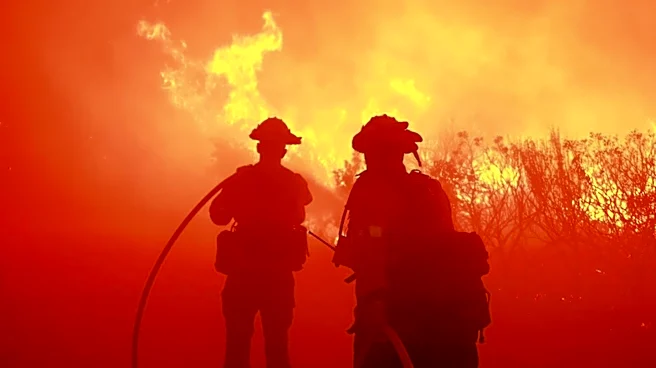
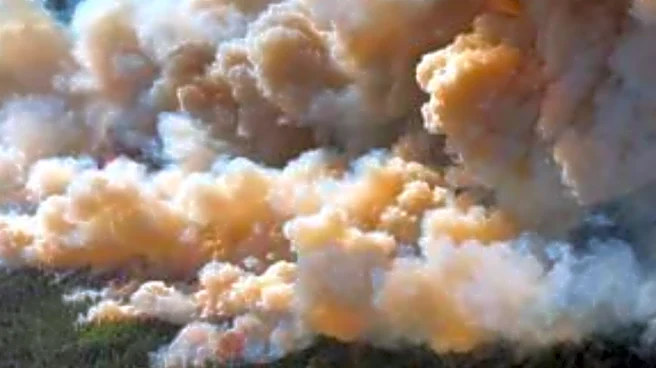
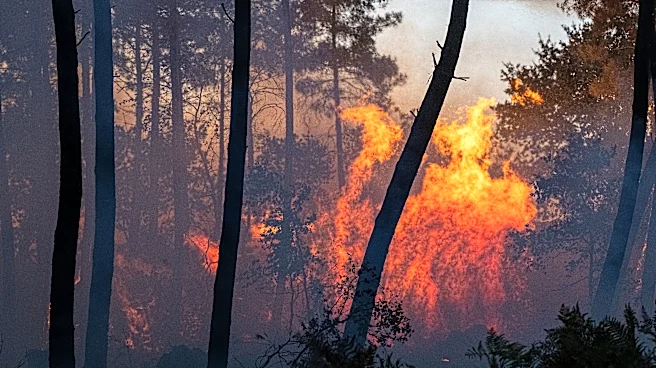
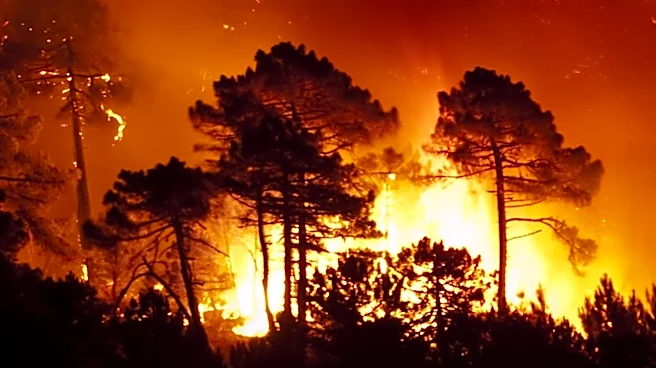
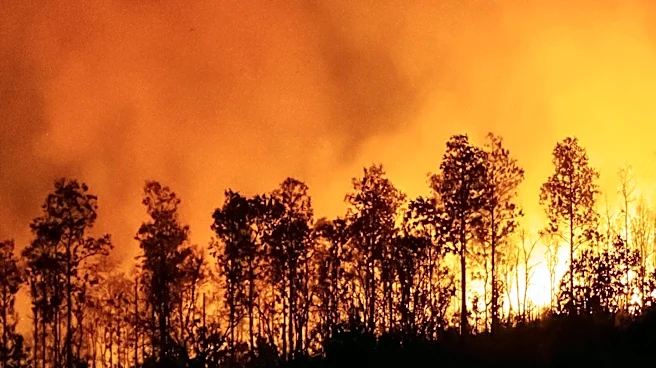
The Spanish government has declared a national emergency due to a series of wildfires threatening communities near Madrid and in the province of Avila. The fires have forced the evacuation of over 10,000 people as firefighters struggle to contain the blazes.
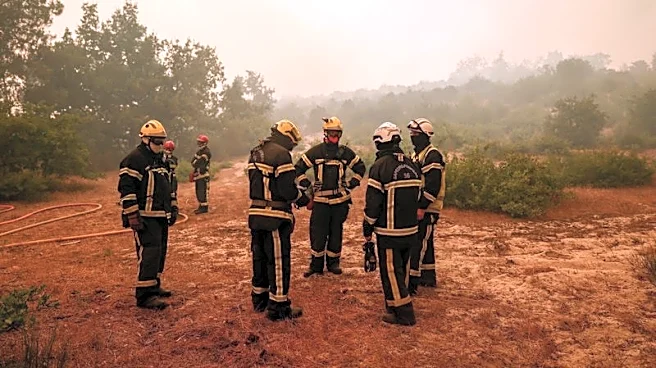
The decision to declare an emergency was made by the Spanish Interior Ministry, citing the simultaneous outbreak of several fires, adverse weather conditions, and the need for extensive resource mobilization. The regional government of Madrid has described the situation as one of 'extreme gravity,' with active fires in Villa del Prado, San Martin de Valdeiglesias, and Almorox posing a significant threat. The wildfire in Burgohondo, Avila, is also at risk of spreading to the Madrid region due to current weather conditions. More than 270 emergency personnel and 40 ground units, along with several Military Emergency Unit contingents, have been deployed to the affected areas.
Why It's Important?
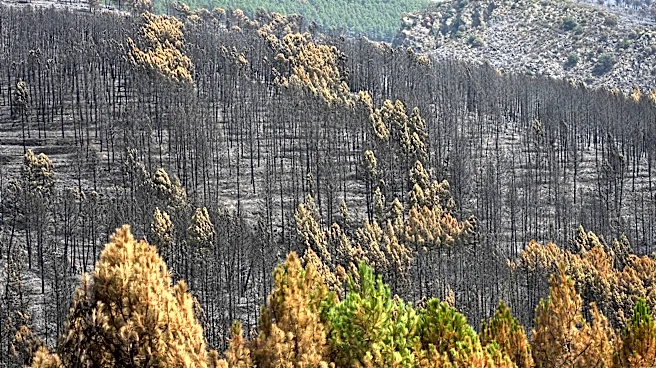
The declaration of a national emergency underscores the severity of the wildfire situation in Spain, which is experiencing one of its deadliest wildfire seasons in decades. The fires have already burned over 100,000 hectares this year, matching the country's average annual burned area over the past decade. The situation highlights the increasing frequency and intensity of wildfires in southern Europe, which scientists attribute to climate change. The emergency response involves significant coordination among various public administrations, emphasizing the complexity and scale of the firefighting efforts required. The impact on local communities is profound, with thousands displaced and significant resources allocated to combat the fires.
What's Next?
The immediate focus is on containing the wildfires and preventing them from spreading further, particularly towards the Madrid region. Authorities are coordinating efforts under the National Civil Protection System law, with the interior minister overseeing the response. The situation remains dynamic, with weather conditions playing a critical role in the fires' progression. Continued monitoring and resource deployment will be essential in managing the crisis. The long-term implications may include increased investment in firefighting capabilities and strategies to mitigate the impact of climate change on wildfire frequency and intensity.