






What's Happening?
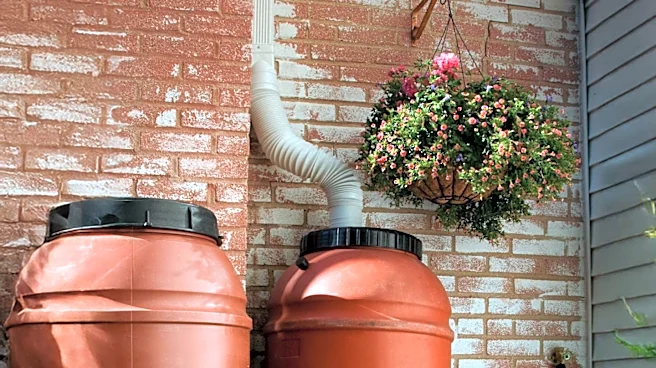
Tucson Water is providing rebates of up to $2,000 to single-family residential customers and small commercial businesses for implementing water harvesting systems. This initiative aims to encourage water conservation and sustainable water management practices
within the community. To qualify for these rebates, participants are required to attend a free rainwater harvesting workshop. Following the workshop, applicants must submit a pre-approval application for their proposed water harvesting system. This program is part of broader efforts in Tucson to enhance water sustainability and mitigate the effects of climate change by promoting efficient water use. The city also supports other environmental initiatives, such as the Tucson Million Trees program, which seeks to plant one million trees by 2030 to increase the urban tree canopy, and the Green Stormwater Infrastructure Mini-Grant, which helps neighborhoods create green spaces by capturing stormwater.
Why It's Important?
This rebate program is significant for several reasons. Firstly, it directly incentivizes water conservation, which is crucial in arid regions like Tucson where water resources are often scarce. By reducing reliance on municipal water supplies, residents and businesses can lower their water bills and contribute to the long-term sustainability of the local water table. Secondly, the requirement to attend a workshop ensures that participants are educated on effective water harvesting techniques, leading to more successful and efficient systems. This educational component empowers the community with knowledge about sustainable practices. Furthermore, by promoting water harvesting, the program helps to reduce stormwater runoff, which can mitigate urban flooding and improve water quality by allowing stormwater to infiltrate the ground naturally. This initiative aligns with broader environmental goals, supporting a more resilient and sustainable urban environment.
What's Next?
Tucson Water will continue to offer these rebates, encouraging more residents and small businesses to adopt water harvesting technologies. The success of the program will likely be measured by the number of participants, the volume of water conserved, and the overall impact on local water resources. It is anticipated that more workshops will be scheduled to accommodate interested applicants, ensuring widespread access to the necessary information and training. The city may also explore expanding the rebate program or introducing similar incentives for other water-saving technologies if this initiative proves highly effective. Continued community engagement and outreach will be vital to maximize participation and achieve the program's environmental and economic benefits. The integration of such programs with other green infrastructure initiatives, like tree planting and green stormwater infrastructure, suggests a comprehensive approach to urban sustainability.
Beyond the Headlines
Beyond the immediate financial benefits and water savings, this program signifies a broader shift towards decentralized and community-led water management. By empowering individual property owners to manage their water resources, it fosters a sense of environmental stewardship and resilience at the local level. This approach can reduce the strain on centralized water infrastructure and promote a more distributed water supply system, which can be more robust in the face of climate change impacts such as droughts or extreme weather events. Ethically, it promotes responsible resource consumption and highlights the importance of individual actions in addressing collective environmental challenges. Legally, such programs often operate within existing water rights frameworks but can influence future policy discussions around water allocation and conservation. Culturally, it encourages a greater appreciation for water as a precious resource and integrates sustainable practices into daily life, potentially inspiring similar initiatives in other water-stressed regions.