








What's Happening?
Libya has officially received recognition from the World Health Organization (WHO) for maintaining its polio-free status. This acknowledgment was communicated through an official letter from the Regional Commission for the Certification of Poliomyelitis
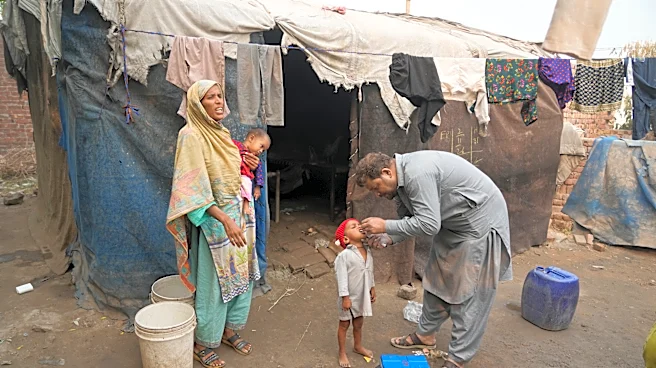
Eradication in the WHO's Eastern Mediterranean Region to Libya's National Certification Committee. The Libyan National Center for Disease Control announced this development, highlighting that the recognition underscores Libya's consistent adherence to epidemiological surveillance standards and its effective national immunization programs. Polio is a highly contagious viral disease that primarily affects young children, often leading to permanent paralysis. Vaccination remains the most effective method for preventing the disease and halting its transmission.
Why It's Important?
This recognition is crucial for Libya as it signifies a significant public health achievement amidst ongoing political and social challenges. Maintaining a polio-free status demonstrates the resilience and effectiveness of Libya's public health infrastructure, particularly its immunization programs and disease surveillance systems. For the international community, it provides assurance that Libya is not a source of polio transmission, which is vital for global eradication efforts. This positive health indicator can also contribute to improving Libya's international standing and potentially attract further support for its healthcare sector. The continued absence of polio reduces the burden on the country's healthcare system and protects its most vulnerable population, young children, from a debilitating disease.
What's Next?
Libya will need to continue its robust epidemiological surveillance and maintain high vaccination coverage rates to sustain its polio-free status. The ongoing commitment to public health programs will be essential to prevent any reintroduction or resurgence of the virus. International health organizations, including the WHO, will likely continue to monitor Libya's efforts and provide support as needed. This recognition could also serve as a foundation for strengthening other public health initiatives within the country, potentially leading to improved health outcomes across various infectious diseases. The focus will remain on vigilant monitoring and proactive immunization strategies.
Beyond the Headlines
The achievement of polio-free status in Libya, despite its complex internal situation, highlights the critical importance of sustained public health efforts even in challenging environments. It underscores that basic health services, such as immunization, are fundamental to national stability and development. This success can serve as a model for other nations facing similar difficulties, demonstrating that with commitment and international cooperation, significant public health milestones are attainable. It also implicitly emphasizes the role of international bodies like the WHO in providing the frameworks and support necessary for such achievements, transcending political divides for the sake of global health.