







What's Happening?
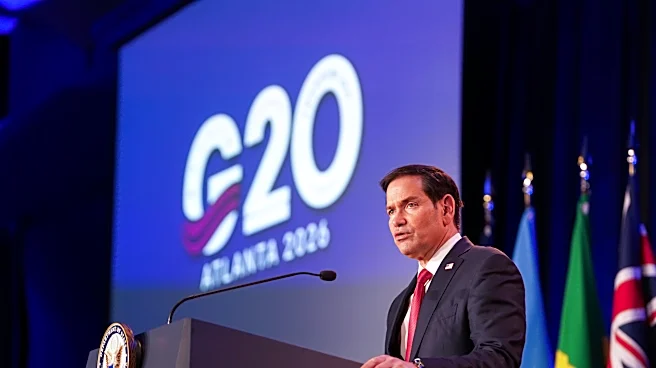
Indonesia's Foreign Minister Arrmanatha Nasir stressed the importance of strengthening national resilience as a foundation for regional and global resilience during the Group of 20 (G20) Foreign Ministers' Meeting in Atlanta, United States. According
to a written statement from the Foreign Ministry in Jakarta, Nasir highlighted that national, regional, and global resilience are interconnected and necessitate effective multilateral cooperation. He participated in three plenary sessions focusing on geopolitics, energy, and supply chains. During the geopolitics session, Nasir addressed the significant impact of international conflicts on developing nations, including Indonesia, advocating for de-escalation, dialogue, and constructive cooperation. Indonesia also underscored the importance of adhering to the 1982 United Nations Convention on the Law of the Sea (UNCLOS) for freedom of navigation. In the energy session, Nasir emphasized energy security as integral to national resilience, citing Indonesia's B50 biodiesel program and the development of 100 gigawatts of solar power plants. For supply chains, Indonesia called for ensuring reliability and strengthening the multilateral trading system, proposing improved preparedness and affordable long-term financing, along with establishing more production hubs in developing countries.
Why It's Important?
Indonesia's emphasis on national and global resilience at the G20 meeting highlights a critical perspective from a developing nation amidst global instability. This approach underscores the interconnectedness of domestic stability with broader international security and economic frameworks. For the U.S. and other developed nations, Indonesia's call for de-escalation and dialogue in geopolitical conflicts, particularly concerning their impact on developing countries, serves as a reminder of the far-reaching consequences of major power rivalries. The focus on energy security and the acceleration of energy transition, as advocated by Indonesia, is crucial for global sustainability and reducing reliance on volatile fossil fuel markets, which directly impacts U.S. energy policy and investment in renewable technologies. Furthermore, the proposal to establish more production hubs in developing countries and strengthen technology partnerships could lead to more diversified and resilient global supply chains, benefiting U.S. businesses by reducing vulnerabilities to single-point failures and fostering new markets.
What's Next?
Indonesia's proactive stance at the G20 meeting suggests it will continue to advocate for multilateral cooperation and resilience-building initiatives on the global stage. The proposals for strengthening national resilience, promoting dialogue in geopolitical disputes, and enhancing energy security through sustainable development are likely to be reiterated at future international forums, including the upcoming G20 Leaders' Summit in Miami in December 2026. Indonesia's bilateral meetings with foreign ministers from various countries, including Turkiye, Russia, the United Kingdom, Canada, and Saudi Arabia, indicate ongoing diplomatic efforts to build consensus and foster cooperation outside of the plenary sessions. The focus on establishing more production hubs in developing countries could lead to new trade agreements and investment opportunities, potentially reshaping global manufacturing and supply chain dynamics. These efforts will be crucial in influencing the agenda and outcomes of future G20 discussions, particularly as nations grapple with persistent geopolitical tensions and economic uncertainties.
Beyond the Headlines
Indonesia's articulation of national resilience as the bedrock for regional and global stability offers a nuanced perspective on international relations, moving beyond traditional power politics to emphasize internal strength and sustainable development. This approach implicitly challenges the notion that global stability is solely the purview of major powers, suggesting that the collective resilience of all nations, particularly developing ones, is essential. The call for respecting UNCLOS and ensuring freedom of navigation, while seemingly a standard diplomatic point, takes on added significance in the context of rising maritime tensions in various parts of the world, including the South China Sea. By advocating for more production hubs in developing countries, Indonesia is not just seeking economic benefits but also promoting a more equitable distribution of global manufacturing capabilities, which could lead to a rebalancing of economic power and a more inclusive global economy. This long-term vision could foster greater stability by reducing economic disparities and promoting shared prosperity.