







What's Happening?
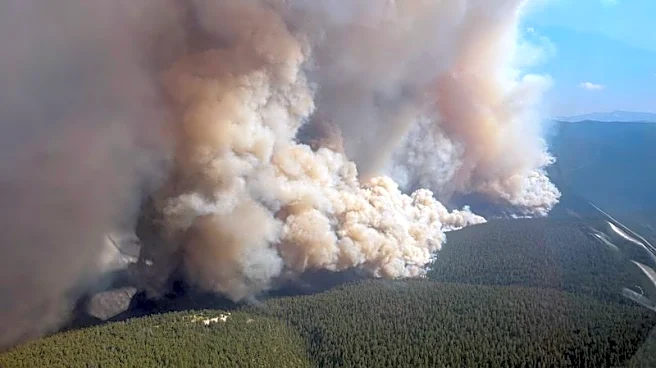
Recent political discourse in the United States has been marked by Republican criticism of Canada for its handling of wildfires, which have resulted in smoke affecting air quality in the U.S. This criticism has been linked to the influence of fossil fuel
money in American politics. According to reports, Republican lawmakers have largely attributed the intensity of the wildfires to poor forest management in Canada, omitting the role of climate change. This stance contrasts with public opinion, as a poll by Data for Progress indicates that 64% of U.S. voters recognize climate change as a factor exacerbating wildfires. The report highlights that fossil fuel interests significantly shape political narratives, limiting discussions and actions on climate-related issues.
Why It's Important?
The situation underscores the powerful role of fossil fuel money in shaping U.S. political responses to environmental issues. The reluctance of Republican lawmakers to acknowledge climate change as a factor in the wildfires reflects broader challenges in addressing climate policy. This has implications for public health, as air quality deteriorates due to smoke, and for international relations, as tensions with Canada rise. The influence of fossil fuel interests may hinder effective policy-making, despite public awareness of climate change impacts. This dynamic illustrates the broader struggle within U.S. politics to balance economic interests with environmental and public health priorities.
What's Next?
As the debate continues, there may be increased pressure on lawmakers to address the climate change component of the wildfires. Public opinion could drive calls for more comprehensive environmental policies. However, the entrenched influence of fossil fuel money suggests that significant policy shifts may face resistance. The ongoing impact of the wildfires on air quality could also prompt further scrutiny of political responses and the role of industry funding in shaping them. Internationally, the U.S.-Canada relationship may experience strain, potentially affecting cooperation on environmental and trade issues.
Beyond the Headlines
The situation highlights ethical concerns about the role of money in politics, particularly regarding environmental policy. The fossil fuel industry's influence raises questions about the integrity of political decision-making and the ability of elected officials to act in the public interest. This case also reflects broader cultural and ideological divides within the U.S. on climate change, with implications for future policy debates. The challenge of reconciling economic interests with environmental sustainability remains a critical issue for U.S. society and governance.