



What's Happening?
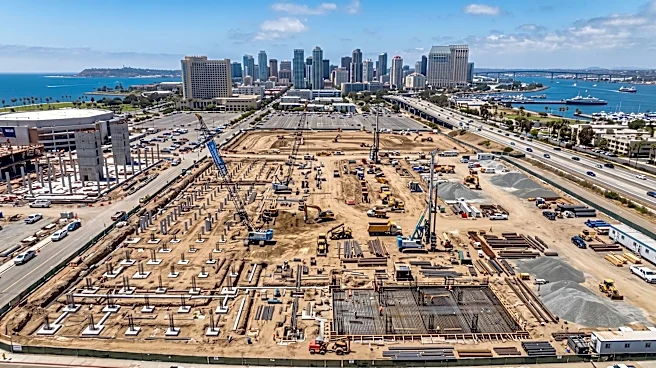
The San Diego City Council has approved the $4.2 billion Midway Rising project, a significant overhaul of the city's Midway District. This development, led by billionaire Stan Kroenke, will replace the existing Sports Arena with a new 16,000-seat arena
and introduce 4,224 housing units, with 2,000 designated as affordable. This makes it the largest affordable housing project on public land in state history. The plan also includes 130,000 square feet of retail space, a 15-acre park, and $460 million in infrastructure improvements. The city will forgo major lease payments for the 49-acre parcel, instead receiving a portion of ticket sales until the new venue is complete, after which the Midway Rising team will retain ticket revenue to cover arena costs. The Independent Budget Analyst estimates the city will collect between $38.1 and $68.5 million in combined arena and development revenue over the 105-year deal, not accounting for inflation.
Why It's Important?
This project holds significant importance for San Diego and the broader U.S. housing landscape. The inclusion of 2,000 affordable housing units addresses a critical need in California, a state grappling with a severe housing crisis. By leveraging public land for such a large-scale affordable housing initiative, the project could serve as a model for other cities facing similar challenges. The development also promises substantial economic benefits through job creation during construction and ongoing operations of the new arena and retail spaces. However, the city's decision to forgo major lease payments and the long-term financial projections, which do not factor in inflation, raise questions about the ultimate financial return for taxpayers. The project's success could influence future public-private partnerships for urban redevelopment and affordable housing initiatives across the nation.
What's Next?
Following the City Council's approval, the next steps involve the Midway Rising team moving forward with the development phases. The city council also unanimously voted to initiate the creation of an Enhanced Infrastructure Financing District, which could help reimburse infrastructure improvement costs through future tax-increment financing. Mayor Todd Gloria has expressed strong support for the project, emphasizing its focus on housing and public benefits. While proponents celebrate the new housing and arena, opponents have raised concerns about potential flooding and contamination from a century-old landfill beneath the site, issues that will likely require continued monitoring and mitigation efforts as the project progresses. The long-term financial implications for the city, particularly regarding the foregone lease payments and the 105-year deal, will be closely watched.
Beyond the Headlines
The Midway Rising project highlights the complex interplay between urban development, public policy, and private investment in addressing societal needs. The decision to prioritize affordable housing on public land, even at the expense of immediate lease revenue, reflects a growing recognition of the housing crisis as a fundamental challenge. However, the project also underscores the potential for tension between public benefit and private profit, particularly in large-scale developments involving billionaire investors. The debate surrounding the project, including environmental concerns and financial arrangements, reflects broader societal discussions about equitable development, environmental stewardship, and the role of government in facilitating large-scale urban transformation. Its implementation will offer valuable insights into the efficacy of such public-private models for sustainable urban growth and affordable housing provision.