


What's Happening?
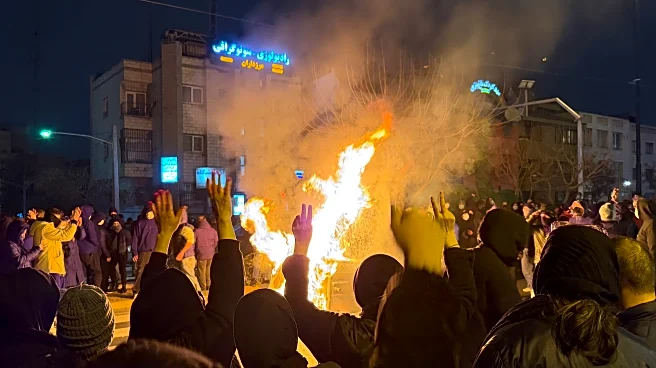
A volunteer member of Iran's Revolutionary Guard was killed during protests in the western province of Lorestan. The demonstrations, which have been fueled by economic distress, mark the first fatality among security forces. The protests began in Tehran
and have spread to other provinces, driven by economic pressures such as inflation and currency devaluation. The state-run IRNA news agency reported the death but did not provide details. The Student News Network, close to the Basij, blamed demonstrators for the death. The protests have been the largest since 2022, following the death of Mahsa Amini. Iran's government has declared public holidays, possibly to reduce protest turnout.
Why It's Important?
The death of a security force member could escalate the Iranian government's response to the protests, potentially leading to increased violence. The protests highlight significant economic challenges facing Iran, including a rapidly depreciating currency. These economic issues are compounded by international sanctions and internal political tensions. The situation could affect regional stability, especially given Iran's geopolitical significance. The protests also reflect broader dissatisfaction with Iran's theocratic government, which could lead to further unrest if economic conditions do not improve.
What's Next?
Iran's government may intensify its crackdown on protests, potentially leading to more violence. The international community will likely monitor the situation closely, especially given Iran's nuclear ambitions and regional influence. The protests could pressure Iran's government to address economic grievances, though significant policy changes may be unlikely without external negotiations. The situation could also impact Iran's relations with Western countries, particularly if the protests lead to human rights violations.