
What's Happening?
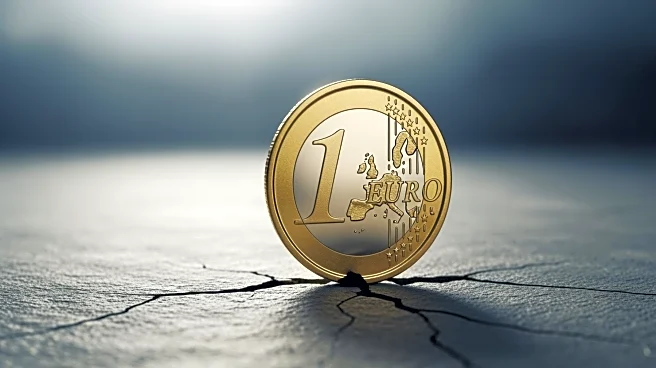
Bulgaria has officially joined the euro currency union, becoming its 21st member. This transition allows Bulgarians to withdraw euros from cash machines, marking a significant shift from the lev, which
will still be used for cash payments throughout January. The move is part of Bulgaria's deeper integration into the European Union, following its membership in 2007. However, this milestone comes at a time of political instability, as the conservative-led government recently resigned due to nationwide anti-corruption protests. Additionally, there is public skepticism about the change, with concerns about potential price increases. The government had previously reduced inflation to 2.7% to meet EU requirements, but the lack of a regular budget for the upcoming year poses challenges for reforms and the utilization of EU support funds.
Why It's Important?
Bulgaria's adoption of the euro is a crucial step in its economic integration with the European Union, potentially enhancing trade and investment opportunities. However, the political instability and public skepticism surrounding the transition could hinder these benefits. The resignation of the government and the absence of a regular budget may delay necessary reforms and the effective use of EU funds, impacting economic growth. Additionally, nationalist and pro-Russian groups are exploiting fears of increased poverty and loss of national identity, which could fuel further political unrest. The situation highlights the complexities of economic integration within the EU, especially for countries with recent histories of political and economic transition.
What's Next?
The immediate future for Bulgaria involves managing the transition to the euro while addressing political instability. The formation of a new government will be crucial in establishing a regular budget and implementing reforms to stabilize the economy. Public communication strategies may be necessary to address fears and skepticism about the euro adoption. The EU will likely monitor Bulgaria's progress closely, as successful integration could serve as a model for other countries considering joining the eurozone. The situation also presents an opportunity for Bulgaria to strengthen its position within the EU, provided it can navigate the current challenges effectively.